
Gallbladder Cancer Treatment in Delhi
Gallbladder cancer treatment tailored to your diagnosis using robotic surgery, laparoscopic surgery, open surgery, and multidisciplinary cancer care. Consult Dr. Archit Pandit, Director & Head of Surgical Oncology at Fortis Escorts Hospital, New Delhi, for personalised treatment and second opinions.

Advanced Gallbladder Cancer Treatment in Delhi
Personalised Care for Gallbladder & Biliary Tract Cancers
Gallbladder cancer is a rare but potentially aggressive cancer that develops in the gallbladder, a small organ located beneath the liver that stores bile for digestion. Because it often causes few or no symptoms in its early stages, many patients are diagnosed only after the disease has progressed. Early evaluation plays an important role in identifying the condition and planning the most appropriate treatment.
If you are looking for gallbladder cancer treatment in Delhi, Dr. Archit Pandit provides comprehensive evaluation and personalised surgical care for gallbladder and biliary tract cancers. Every patient undergoes a detailed clinical assessment, including imaging, pathology, and cancer staging, before treatment recommendations are made.
Depending on the diagnosis, treatment may include robotic gallbladder cancer surgery, laparoscopic surgery, open surgery, chemotherapy, radiation therapy, or multidisciplinary cancer care. The choice of treatment depends on the stage of cancer, tumour location, overall health, and individual clinical needs.
Patients from New Delhi, South Delhi, Noida, Gurugram, Faridabad, Ghaziabad, and across Delhi NCR consult Dr. Archit Pandit for advanced gallbladder cancer treatment, minimally invasive cancer surgery, and expert second opinions.
What is Gallbladder Cancer?
Understanding Gallbladder Cancer
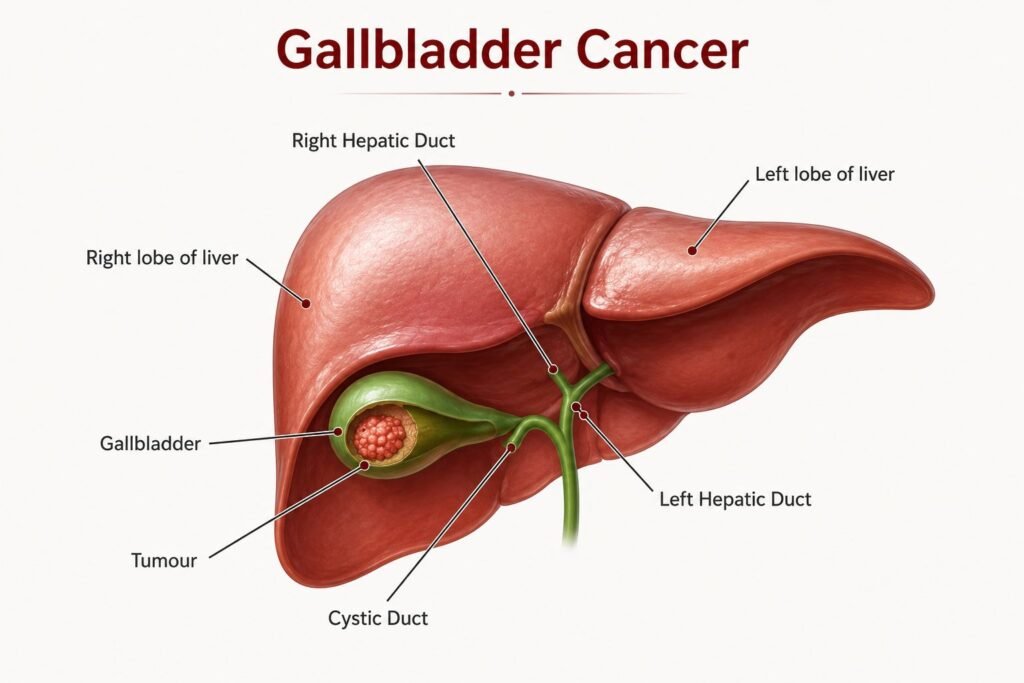
Gallbladder cancer occurs when abnormal cells in the gallbladder grow uncontrollably and form a tumour. The gallbladder is a small, pear-shaped organ located beneath the liver that stores and releases bile to help digest fats. The most common type is adenocarcinoma, which begins in the glandular cells lining the inner surface of the gallbladder.
One of the biggest challenges with gallbladder cancer is that it often develops silently. Early-stage disease may not cause noticeable symptoms, making diagnosis difficult until the cancer has grown or spread. In some patients, gallbladder cancer is discovered during investigations or surgery for gallstones or other gallbladder conditions.
Treatment depends on the type of cancer, stage of disease, tumour location, lymph node involvement, and overall health. After a comprehensive evaluation, Dr. Archit Pandit develops a personalised treatment plan that may include robotic surgery, laparoscopic surgery, open surgery, chemotherapy, or radiation therapy, depending on what is most appropriate for the individual patient.
Symptoms of Gallbladder Cancer
Gallbladder cancer may not cause symptoms in its early stages. When symptoms do occur, they can resemble those of other gallbladder or digestive conditions. Persistent or unexplained symptoms should always be evaluated by a specialist.
Common symptoms include:
- Persistent pain in the upper right abdomen
- Yellowing of the skin and eyes (Jaundice)
- Unexplained weight loss
- Loss of appetite
- Nausea or vomiting
- Abdominal bloating
- Fever
- Itching
- A lump or swelling in the upper abdomen (in some patients)
Note: These symptoms do not always indicate gallbladder cancer. However, if they are persistent, worsening, or unexplained, early consultation with a Surgical Oncologist is recommended for accurate diagnosis.
What Causes Gallbladder Cancer?
Risk Factors That May Increase the Chances of Developing Gallbladder Cancer
The exact cause of gallbladder cancer is not fully understood. It develops when genetic changes (mutations) cause gallbladder cells to grow uncontrollably, forming a tumour. While anyone can develop gallbladder cancer, certain factors are associated with a higher risk.
Common risk factors include:
- Gallstones and long-standing gallbladder inflammation
- Chronic cholecystitis (chronic gallbladder infection)
- Porcelain gallbladder
- Gallbladder polyps
- Choledochal cysts
- Increasing age
- Female gender
- Obesity
- Family history of biliary tract cancers (in some patients)
Having one or more risk factors does not mean you will develop gallbladder cancer. However, people with persistent gallbladder symptoms, suspicious imaging findings, or long-standing gallbladder disease should undergo timely medical evaluation.
How is Gallbladder Cancer Diagnosed?
Comprehensive Evaluation for an Accurate Diagnosis
Diagnosing gallbladder cancer involves identifying the type, stage, and extent of the disease before planning treatment. A thorough evaluation helps determine the most appropriate treatment approach.
Your evaluation may include:
- Clinical Consultation: Review of your symptoms, medical history, and physical examination.
- Blood Tests: Liver function tests and selected tumour markers to assess overall health.
- Ultrasound: Often the first imaging test to examine the gallbladder and bile ducts.
- CT Scan, MRI & PET-CT: Advanced imaging to identify the size, location, and spread of the cancer.
- Biopsy: Tissue examination to confirm the diagnosis and identify the cancer type.
- Multidisciplinary Review: Imaging and pathology findings are reviewed to develop a personalised treatment plan.
Early diagnosis helps identify the most appropriate treatment and improves the chances of timely cancer care.
Stages of Gallbladder Cancer
Understanding Cancer Progression
The stage of gallbladder cancer describes how far the disease has spread and helps guide treatment decisions.
- Stage I: Cancer is confined to the gallbladder and may be treated with surgery.
- Stage II: The tumour has grown into the gallbladder wall but remains localised.
- Stage III: Cancer has spread to nearby organs or lymph nodes and may require combined treatment.
- Stage IV: The disease has spread to distant organs and usually requires systemic therapy and supportive care.
Your treatment plan is based on the cancer stage, tumour location, and your overall health.
Treatment Options for Gallbladder Cancer
Personalised Treatment Based on Your Diagnosis
Surgery is the main treatment for early-stage gallbladder cancer, while advanced disease may require a combination of surgery, chemotherapy, radiation therapy, or other treatments. Treatment for gallbladder cancer in Delhi depends on the stage of cancer, tumour location, and overall health. Dr. Archit Pandit recommends a personalised treatment plan after a detailed evaluation.
Treatment options may include:
- Robotic Surgery: A minimally invasive approach for selected patients using the Da Vinci Robotic System.
- Laparoscopic Surgery: Keyhole surgery for eligible early-stage gallbladder cancers.
- Open Surgery: Recommended when more extensive cancer removal is required.
- Chemotherapy: May be given before or after surgery or for advanced disease.
- Radiation Therapy: Used in selected cases to reduce recurrence or relieve symptoms.
- Multidisciplinary Cancer Care: Treatment planned in collaboration with specialists in surgical oncology, medical oncology, radiology, pathology, and gastroenterology.
The most appropriate treatment is decided after considering your diagnosis, imaging findings, and overall clinical condition.
Why Choose Dr. Archit Pandit?
Expert Gallbladder Cancer Treatment in Delhi
Choosing the right specialist is an important step in gallbladder cancer treatment. Dr. Archit Pandit provides personalised care based on the type of cancer, its stage, imaging findings, and your overall health. Every treatment plan is developed using current clinical evidence and a multidisciplinary approach.
Patients choose Dr. Archit Pandit for:
- AIIMS-trained Surgical Oncologist
- Director & Head – Surgical Oncology, Fortis Escorts Hospital, New Delhi
- Expertise in robotic, laparoscopic, and open gallbladder cancer surgery
- Personalised treatment planning for every patient
- Multidisciplinary cancer care with oncology specialists
- Evidence-based treatment and second opinions