
Gastrointestinal Cancer Treatment in Delhi
Gastrointestinal cancer treatment in Delhi includes the diagnosis and management of cancers affecting the oesophagus, stomach, liver, pancreas, gallbladder, colon, rectum, appendix, and other digestive organs.
Book Appointment
Connect with our specialists for personalised guidance
Advanced Gastrointestinal Cancer Treatment in Delhi
Personalised Care for Digestive System Cancers
A diagnosis of gastrointestinal (GI) cancer requires timely evaluation and a personalised treatment plan. If you are looking for gastrointestinal cancer treatment in Delhi, Dr. Archit Pandit provides comprehensive care for stomach, colon, rectal, liver, pancreatic, gallbladder, oesophageal, appendix, and peritoneal cancers.
Depending on the diagnosis and stage of cancer, treatment may include robotic cancer surgery, laparoscopic surgery, HIPEC, Cytoreductive Surgery (CRS), open surgery, chemotherapy, or multidisciplinary cancer care. Every treatment plan is tailored to the patient's clinical condition, overall health, and treatment goals.
Patients from New Delhi, Noida, Gurugram, Faridabad, and across Delhi NCR consult Dr. Archit Pandit for evidence-based gastrointestinal cancer treatment, personalised surgical care, and expert second opinions.
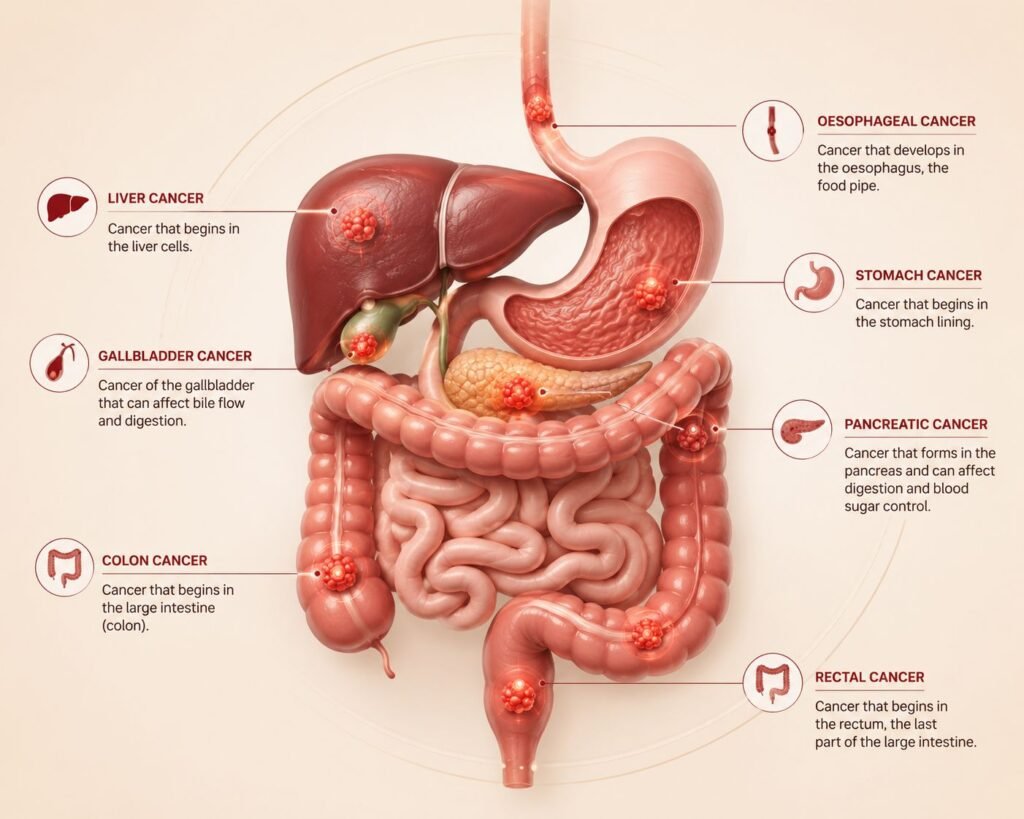
What is Gastrointestinal Cancer?
Understanding Cancers of the Digestive System
Gastrointestinal (GI) cancer is a group of cancers that affect the oesophagus, stomach, liver, gallbladder, pancreas, small intestine, colon, rectum, appendix, and peritoneum. Each type differs in its location, symptoms, and treatment, making an accurate diagnosis essential.
Early symptoms may include persistent abdominal pain, difficulty swallowing, unexplained weight loss, blood in the stool, changes in bowel habits, or jaundice, although some GI cancers may not cause symptoms in the early stages.
Treatment depends on the type of cancer, stage, tumour location, and overall health. Following a comprehensive evaluation, Dr. Archit Pandit develops a personalised treatment plan that may include robotic surgery, laparoscopic surgery, HIPEC, Cytoreductive Surgery (CRS), chemotherapy, or multidisciplinary cancer care, based on each patient's individual needs.
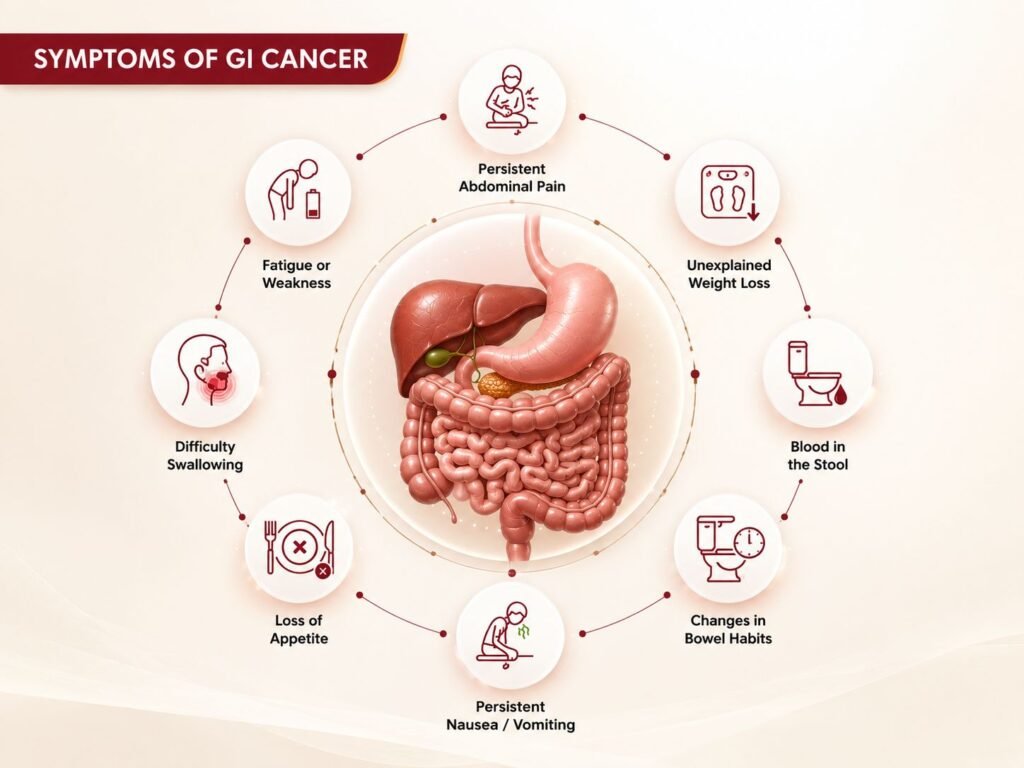
Symptoms of Gastrointestinal Cancer
The symptoms of gastrointestinal cancer vary depending on the affected organ and may also occur in non-cancerous digestive conditions.
- Persistent Abdominal Pain
- Unexplained Weight Loss
- Blood in the Stool
- Difficulty Swallowing (Dysphagia)
- Changes in Bowel Habits
- Persistent Nausea or Vomiting
- Loss of Appetite
- Persistent Fatigue or Weakness
Important: These symptoms do not always indicate gastrointestinal cancer, but if you experience any symptoms, consult a GI cancer specialist in Delhi for timely evaluation and diagnosis. Early diagnosis can help identify the underlying cause and determine the most appropriate treatment.
Types of Gastrointestinal Cancers Treated
Gastrointestinal cancer treatment in Delhi includes the diagnosis and surgical management of cancers affecting the digestive system. As a GI cancer surgeon in Delhi, Dr. Archit Pandit provides personalised treatment based on the type of cancer, disease stage, tumour location, and overall health.

Stomach Cancer
Advanced surgical treatment for gastric cancer using robotic, laparoscopic, or open surgery where appropriate.

Colon & Rectal Cancer
Comprehensive care for colorectal cancer, including minimally invasive and robotic surgery in selected patients.

Liver & Pancreatic Cancer
Specialised surgical treatment for liver, pancreatic, and hepatobiliary cancers based on individual clinical needs.

Gallbladder Cancer
Personalised surgical management for gallbladder and biliary tract cancers following comprehensive evaluation.

Appendiceal & Peritoneal Cancer
Advanced treatment with Cytoreductive Surgery (CRS) and HIPEC for carefully selected patients.

Oesophageal & Other GI Cancers
Evaluation and treatment for oesophageal, small intestine, and other gastrointestinal cancers using evidence-based surgical care.
When Should You Consult a Surgical Oncologist?
Early Evaluation Can Make a Difference
You should consider consulting a Surgical Oncologist in Delhi if you:
✔ Have persistent digestive symptoms lasting more than a few weeks
✔ Notice blood in your stool or unexplained gastrointestinal bleeding
✔ Experience difficulty swallowing or persistent vomiting
✔ Have unexplained weight loss or loss of appetite
✔ Have been diagnosed with a gastrointestinal tumour or cancer
✔ Have a family history of colon cancer, stomach cancer, or other gastrointestinal cancers
✔ Would like a second opinion regarding your diagnosis or treatment plan
Early consultation helps establish an accurate diagnosis, determine the stage of disease, and identify the most appropriate treatment options based on your individual condition.
How is Gastrointestinal Cancer Diagnosed?
Diagnosing gastrointestinal cancer requires identifying the type, location, and stage of the disease before treatment begins. If you are looking for gastrointestinal cancer treatment in Delhi, Dr. Archit Pandit uses a comprehensive clinical evaluation, advanced imaging, endoscopic procedures, and biopsy to accurately diagnose GI cancers and develop a personalised treatment plan.
Clinical Consultation
Assessment of symptoms, medical history, physical examination, and previous medical records.
Endoscopy & Colonoscopy
Camera-based procedures used to examine the digestive tract and obtain biopsy samples when required.
CT Scan, MRI & PET-CT
Advanced imaging to determine the size, location, and stage of gastrointestinal cancer.
Biopsy & Pathology
Laboratory analysis confirms the diagnosis and identifies the type of GI cancer.
Early diagnosis of gastrointestinal cancer improves treatment planning. Patients from New Delhi, Noida, Gurugram, Faridabad, Ghaziabad, and across Delhi NCR consult Dr. Archit Pandit for comprehensive gastrointestinal cancer evaluation and personalised care.
Advanced Treatment Options for Gastrointestinal Cancer
Gastrointestinal cancer treatment in Delhi is tailored to the type of cancer, stage, tumour location, and overall health.
Robotic Cancer Surgery
Minimally invasive Da Vinci robotic surgery for selected gastrointestinal cancers where clinically appropriate.
Laparoscopic Cancer Surgery
Keyhole surgery performed through small incisions for eligible GI cancer patients.
HIPEC Surgery
Heated chemotherapy delivered into the abdominal cavity after Cytoreductive Surgery (CRS) for selected cancers.
Cytoreductive Surgery (CRS)
Specialised surgery to remove visible abdominal tumours before HIPEC in selected patients.
Open Cancer Surgery
Recommended when conventional surgery offers the safest and most effective treatment.
Multidisciplinary Cancer Care
Treatment planning with specialists in surgical oncology, medical oncology, radiology, pathology, gastroenterology, and anaesthesia.
Why Choose Dr. Archit Pandit?
Personalised Gastrointestinal Cancer Care in Delhi
GI Cancer Surgery Expertise
Comprehensive surgical care for stomach, colon, rectal, liver, pancreatic, gallbladder, and oesophageal cancers.
Robotic & Minimally Invasive Surgery
Expertise in robotic, laparoscopic, and advanced GI cancer surgery where clinically appropriate.
Personalised Treatment Planning
Every treatment plan is based on your diagnosis, imaging, pathology, and overall health.
Multidisciplinary Cancer Care
Collaborative treatment planning with oncology, radiology, pathology, gastroenterology, and anaesthesia specialists.
Patient-Centred Support
Clear communication and personalised guidance from diagnosis through recovery.
Evidence-Based Care
Treatment recommendations follow current clinical guidelines and accepted surgical practices.
Take the First Step Towards Expert GI Cancer Care
Personalised Gastrointestinal Cancer Treatment in Delhi
If you have persistent digestive symptoms, have been diagnosed with stomach, colon, rectal, liver, pancreatic, gallbladder, or oesophageal cancer, or wish to seek a second opinion, consult Dr. Archit Pandit for a comprehensive evaluation.
Every treatment plan is based on accurate diagnosis, cancer staging, evidence-based decision-making, and personalised surgical care, helping patients understand their options with confidence.
Frequently Asked Questions
Everything You Need to Know About Gastrointestinal Cancer Treatment
What is gastrointestinal cancer? expand_more
Gastrointestinal (GI) cancer refers to cancers that develop in the digestive system, including the oesophagus, stomach, liver, pancreas, gallbladder, small intestine, colon, rectum, appendix, and peritoneum. Treatment depends on the type of cancer, its stage, and the patient's overall health.
What are the early signs of gastrointestinal cancer? expand_more
Early symptoms may include persistent abdominal pain, unexplained weight loss, blood in the stool, difficulty swallowing, changes in bowel habits, loss of appetite, nausea, or fatigue. These symptoms can also occur in noncancerous conditions, so persistent symptoms should be evaluated by a doctor.
What causes gastrointestinal cancer? expand_more
The exact cause varies by cancer type. Factors such as age, smoking, obesity, alcohol use, chronic digestive diseases, family history, genetic conditions, and certain infections may increase the risk of developing gastrointestinal cancer.
How is gastrointestinal cancer diagnosed? expand_more
Diagnosis may include clinical consultation, blood tests, endoscopy, colonoscopy, CT scan, MRI, PET-CT, and biopsy. These investigations help determine the type, location, and stage of cancer before planning treatment.
What are the treatment options for gastrointestinal cancer? expand_more
Treatment depends on the type and stage of cancer and may include robotic surgery, laparoscopic surgery, open surgery, HIPEC, Cytoreductive Surgery (CRS), chemotherapy, targeted therapy, immunotherapy, or a combination of treatments.
Is robotic surgery used for gastrointestinal cancer? expand_more
Yes. Robotic surgery may be recommended for selected gastrointestinal cancers, including stomach, colon, rectal, liver, pancreatic, and oesophageal cancers, when a minimally invasive approach is clinically appropriate.
 WhatsApp