
Breast Cancer Treatment in Delhi
Dr. Archit Pandit provides personalised breast cancer treatment in Delhi based on the type and stage of cancer, tumour characteristics, overall health and individual treatment goals. Treatment may include breast-conserving surgery, mastectomy, lymph-node surgery, breast reconstruction and other cancer treatments as appropriate.
Book Appointment
Connect with our specialists for personalised guidance
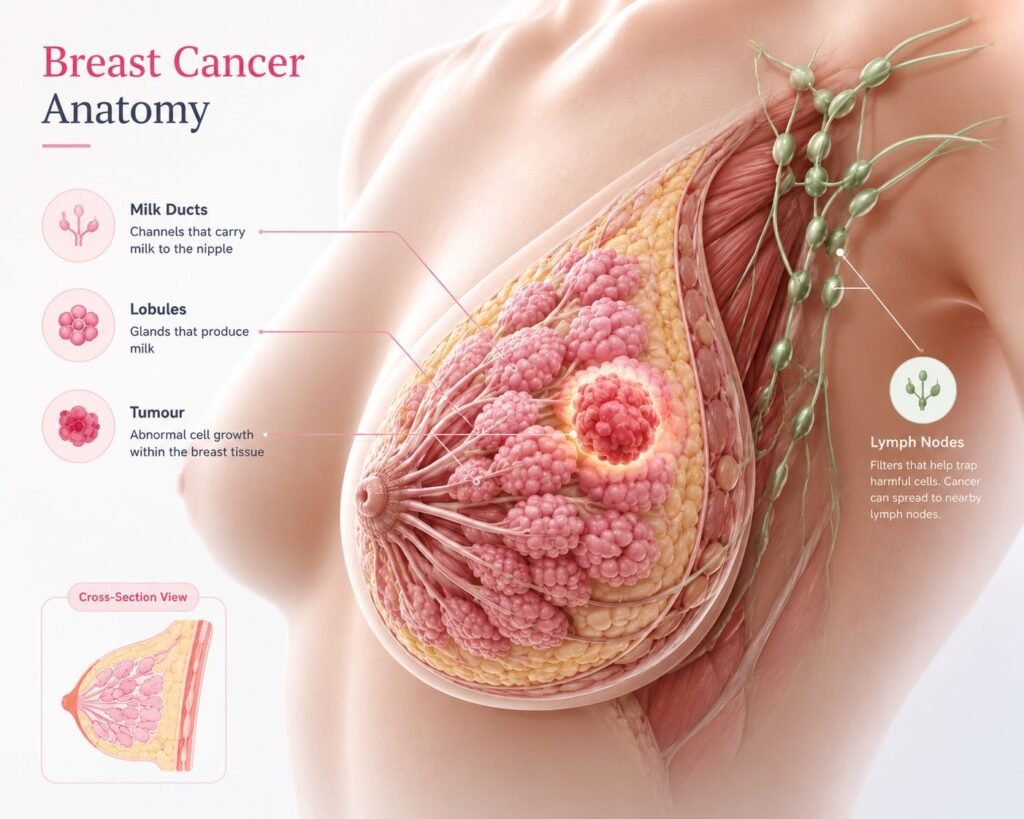
What is Breast Cancer?
Understanding Breast Cancer
Breast cancer develops when abnormal cells in the breast grow in an uncontrolled way. It may begin in the milk ducts or lobules and, depending on its type and stage, can spread to nearby lymph nodes or other parts of the body.
A breast lump does not necessarily mean cancer. Benign conditions such as cysts and fibroadenomas can also cause breast lumps. However, a new or persistent breast change should be evaluated by a healthcare professional.
Diagnosis usually involves a clinical assessment and appropriate breast imaging. When an area appears suspicious, a biopsy may be required to confirm whether cancer is present.
Symptoms of Breast Cancer
Breast cancer may cause noticeable changes, although some cancers are detected through screening before symptoms develop. Possible signs include:
Breast lump or thickening
Change in breast size or shape
Bloody or unusual nipple discharge
Skin dimpling or puckering
Redness or swelling of the breast
Persistent breast pain
Lump or swelling in the underarm
Newly inverted nipple
Non-healing ulcer or sore on the breast
Unexplained weight loss (usually in advanced disease)
Types of Breast Cancer Treated in Delhi
Breast cancer includes different types and biological subtypes. The diagnosis and tumour characteristics help determine which treatments may be appropriate.
Ductal Carcinoma In Situ (DCIS)
DCIS consists of abnormal cells confined to the milk ducts without evidence of invasion into surrounding breast tissue. It is generally classified as Stage 0 breast cancer.
Invasive Ductal Carcinoma (IDC)
Invasive ductal carcinoma begins in the milk ducts and grows into surrounding breast tissue. It is the most common type of invasive breast cancer.
Invasive Lobular Carcinoma (ILC)
Invasive lobular carcinoma begins in the milk-producing lobules. It may grow in a less clearly defined pattern than some other breast cancers, which can affect how it is detected and assessed.
Triple-Negative Breast Cancer
Triple-negative breast cancer does not have estrogen or progesterone receptors and does not have excess HER2 protein. Depending on the stage and other clinical factors, treatment may include chemotherapy, surgery, radiation therapy and, in selected cases, immunotherapy.
HER2-Positive Breast Cancer
HER2-positive breast cancer has higher levels of the HER2 protein. Patients with HER2-positive disease may be candidates for HER2-targeted treatment along with other appropriate therapies.
Inflammatory Breast Cancer
Inflammatory breast cancer is an uncommon and aggressive form that can cause rapid breast swelling, redness, warmth and changes in the appearance of the skin. It requires prompt assessment and coordinated treatment.
Breast Cancer Stages
Understanding the Different Stages of Breast Cancer
Breast cancer staging helps doctors understand how far the cancer has developed or spread and plays an important role in planning treatment. Staging considers the size and extent of the primary tumour, nearby lymph-node involvement, whether the cancer has spread to distant organs, and other tumour characteristics such as grade and biomarkers including ER, PR and HER2.
Breast cancer is broadly classified into the following stages:
- Stage 0: Non-invasive breast cancer, such as ductal carcinoma in situ (DCIS), where abnormal cells remain within the milk ducts.
- Stage I: Early-stage invasive breast cancer that is generally limited to the breast or involves only a small number of nearby lymph nodes.
- Stage II: Breast cancer that may involve a larger tumour and/or nearby lymph nodes.
- Stage III: Locally advanced breast cancer that may involve multiple lymph nodes or nearby tissues.
- Stage IV: Metastatic breast cancer that has spread to distant organs or other parts of the body.
The exact stage is determined after reviewing the clinical examination, breast imaging, biopsy and relevant pathology or staging investigations. Breast cancer treatment is then planned according to the stage, tumour biology and the patient's overall health and treatment goals.
How Is Breast Cancer Diagnosed?
The diagnostic approach depends on the symptoms and findings from the initial assessment.
Clinical Breast Examination
The doctor reviews your symptoms, medical history, and family history, then examines your breasts and nearby lymph nodes.
Mammography and Breast Ultrasound
Imaging helps identify and evaluate suspicious breast areas. The choice of imaging depends on factors such as age, symptoms and clinical findings.
Core Needle Biopsy
A biopsy removes a small sample of tissue from a suspicious area. Laboratory examination can confirm whether cancer is present and identify its type.
Breast MRI
Breast MRI may be recommended in selected patients to assess the extent of disease or assist with treatment planning.
ER, PR and HER2 Testing
Testing for estrogen receptor, progesterone receptor and HER2 status helps classify the cancer and may influence treatment decisions.
Genetic Testing
Genetic testing may be considered when a patient's personal or family history suggests a possible inherited risk of breast cancer.
Early diagnosis allows accurate staging and helps determine the most appropriate treatment. Patients from New Delhi, Noida, Gurugram, Faridabad, Ghaziabad, and across Delhi NCR consult Dr. Archit Pandit for comprehensive breast cancer diagnosis and personalised care.
How Is Breast Cancer Treatment Decided?
Factors That Guide Your Breast Cancer Treatment Plan
Breast cancer treatment is planned according to the type and stage of cancer, tumour characteristics and the patient's overall health. The stage is important, but it is not the only factor that determines which treatment is recommended.
Dr. Archit Pandit may consider:
- Type and subtype of breast cancer
- Tumour size and location
- Lymph-node involvement
- Cancer stage
- Tumour grade
- Estrogen receptor (ER) and progesterone receptor (PR) status
- HER2 status
- Other pathology findings
- Genetic or molecular findings, when relevant
- Overall health and medical history
- Previous treatment
Based on these findings, breast cancer treatment may include surgery, chemotherapy, radiation therapy, hormone therapy, targeted therapy, immunotherapy or a combination of treatments.
For some patients, treatment is given before surgery to reduce the size or extent of the tumour. Others may undergo surgery first, followed by additional treatment when required. The sequence depends on the individual diagnosis and treatment goals.
Breast Cancer Treatment Options in Delhi
Breast cancer treatment in Delhi is personalised based on the type of breast cancer, tumour stage, molecular profile, and overall health.
Breast-Conserving Surgery
Breast-conserving surgery, also called lumpectomy or partial mastectomy, removes the cancer along with a surrounding margin of tissue while preserving most of the breast. Whether breast-conserving surgery is appropriate depends on the size and location of the tumour, the extent of disease and other clinical factors.
Mastectomy
Mastectomy involves removal of the entire breast. It may be recommended when breast-conserving surgery is not appropriate or based on the patient's individual circumstances. The choice between breast-conserving surgery and mastectomy should be discussed after reviewing the diagnosis, imaging and treatment options.
Sentinel Lymph Node Biopsy
The sentinel lymph nodes are the lymph nodes most likely to receive cancer cells first if breast cancer spreads beyond the breast. A sentinel lymph node biopsy removes selected lymph nodes for examination. In appropriate patients, this can provide important staging information while avoiding more extensive lymph-node surgery.
Breast Reconstruction
Breast reconstruction can help restore breast shape after mastectomy. It may be performed during the same operation as the mastectomy or at a later stage. The timing and type of reconstruction depend on the patient's treatment plan, overall health and preferences.
Chemotherapy
Chemotherapy uses anti-cancer medicines to destroy or control cancer cells. Depending on the type and stage of breast cancer, chemotherapy may be given before surgery, after surgery or as part of treatment for advanced disease.
Radiation Therapy
Radiation therapy uses high-energy radiation to destroy cancer cells. It may be recommended after surgery for selected patients to reduce the risk of cancer returning in the treated area.
Targeted Therapy
Targeted medicines act on specific characteristics of cancer cells. For example, HER2-targeted treatment may be used for patients with HER2-positive breast cancer.
Immunotherapy
Immunotherapy may be considered for selected patients, including certain cases of triple-negative breast cancer. Its use depends on the cancer's characteristics and the overall treatment plan.
Breast Cancer Treatment by Stage
Breast cancer treatment depends on the stage of the disease, tumour characteristics and the patient's overall health. Treatment can therefore vary between patients, even at the same stage.
Early-Stage Breast Cancer
Surgery is often an important part of treatment. Radiation therapy and other medicines may also be recommended depending on the tumour.
Locally Advanced Breast Cancer
Some patients receive treatment before surgery to reduce the tumour or extent of disease, followed by surgery and/or radiation therapy when appropriate.
Metastatic Breast Cancer
When breast cancer has spread to distant organs, treatment focuses on controlling the disease, managing symptoms and maintaining quality of life. Medicines are often the main treatment, while surgery or radiation may be used in selected cases.
Recovery After Breast Cancer Surgery
What to Expect After Breast Cancer Surgery
Recovery after breast cancer surgery varies depending on the type of surgery, lymph-node procedures, overall health and whether further cancer treatment is required.
After surgery, recovery may involve:
- Wound and incision care
- Pain management
- Gradual return to daily activities
- Follow-up appointments
- Review of the final pathology report
- Additional treatment when recommended
Some patients may experience temporary swelling, discomfort, changes in sensation or restricted shoulder movement. Lymphoedema (arm swelling) can occur after certain lymph-node procedures.
Your surgical team will provide personalised guidance on wound care, activity, follow-up and recovery based on the procedure performed.
Take the First Step Towards Expert Breast Cancer Care
Personalised Breast Cancer Treatment in Delhi
If you have noticed a breast lump, abnormal breast changes, have recently been diagnosed with breast cancer, or would like a second opinion, consult Dr. Archit Pandit for a comprehensive evaluation and personalised treatment plan.
Every treatment is based on accurate diagnosis, cancer staging, multidisciplinary decision-making, and evidence-based surgical care, helping patients make informed decisions with confidence.
Breast Cancer Treatment FAQs
Everything You Need to Know About Breast Cancer Treatment
How do I know if a breast lump is cancerous? expand_more
Not all breast lumps are cancerous. Many are caused by benign conditions such as cysts or fibroadenomas. However, any new lump should be evaluated by a breast cancer specialist with a clinical examination, breast imaging, and, if required, a biopsy to determine its cause.
What are the first signs of breast cancer? expand_more
The earliest signs may include a painless breast lump, changes in breast shape or size, nipple discharge, skin dimpling, nipple inversion, or swelling in the underarm. Some patients may not have any symptoms, making regular breast screening important.
When should I see a doctor for a breast lump? expand_more
You should consult a breast cancer specialist as soon as you notice a new breast lump, persistent breast pain, nipple discharge, or any unusual breast changes. Early evaluation helps ensure accurate diagnosis and timely treatment.
Can breast cancer be treated without removing the entire breast? expand_more
Yes. Many patients with early-stage breast cancer are suitable candidates for breast-conserving surgery (lumpectomy), where only the tumour and a small margin of healthy tissue are removed while preserving the breast. Your surgeon will determine whether this is the right option for you.
Is breast cancer curable if detected early? expand_more
Yes. Breast cancer diagnosed at an early stage is often highly treatable. Advances in surgery, chemotherapy, radiation therapy, targeted therapy, and hormonal therapy have significantly improved survival rates and long-term outcomes.
How long does it take to recover after breast cancer surgery? expand_more
Recovery depends on the type of surgery performed. Most patients recover within 2–4 weeks after breast-conserving surgery and 4–8 weeks after mastectomy or breast reconstruction, although recovery varies between individuals.

Dr. Archit Pandit
Dr. Archit Pandit is a Surgical Oncologist and Director & Head of the Department of Surgical Oncology at Fortis Escorts Hospital, New Delhi. With over 15 years of clinical experience, he specialises in the surgical management of gastrointestinal, thoracic, breast, gynaecological, head and neck, and complex cancers. He is trained at AIIMS, New Delhi, with advanced fellowship training in surgical oncology in Japan and colorectal cancer in South Korea. His expertise includes robotic cancer surgery, laparoscopic surgery, HIPEC, cytoreductive surgery, and minimally invasive cancer surgery.
This content is reviewed by Dr. Archit Pandit
 WhatsApp