
Liver Cancer Treatment in Delhi
Liver cancer develops when abnormal cells grow uncontrollably in the liver, an organ responsible for digestion, detoxification, and metabolism. The most common type is hepatocellular carcinoma (HCC), which often occurs in people with chronic liver diseases such as hepatitis B, hepatitis C, cirrhosis, or fatty liver disease.
Early liver cancer may not cause noticeable symptoms, making timely screening important for high-risk individuals. As the disease progresses, symptoms such as abdominal pain, jaundice, weight loss, and fatigue may appear.
Dr. Archit Pandit, an experienced Liver Cancer Surgeon in Delhi, provides comprehensive liver cancer treatment in Delhi using advanced surgical techniques and a multidisciplinary approach. Depending on the stage of cancer, treatment may include liver cancer surgery, minimally invasive surgery, chemotherapy, targeted therapy, immunotherapy, or liver-directed therapies to achieve the best possible outcomes.
What is Liver Cancer?
Liver cancer begins when healthy liver cells undergo genetic changes and grow uncontrollably, forming a tumour. It can either originate in the liver (primary liver cancer) or spread to the liver from another organ (secondary or metastatic liver cancer).
Primary liver cancer is the most common form treated by surgical oncologists. Early diagnosis significantly improves the chances of successful treatment and long-term survival.
Symptoms of Liver Cancer
Liver cancer often develops silently in its early stages. As the disease progresses, patients may experience:
- Persistent pain or discomfort in the upper right abdomen
- Unexplained weight loss
- Loss of appetite
- Jaundice (yellowing of the skin and eyes)
- Abdominal swelling or fluid accumulation
- Persistent fatigue and weakness
- Nausea or vomiting
- Enlarged liver or a lump under the ribs
If these symptoms persist, consult an experienced Liver Cancer Specialist in Delhi for timely evaluation.
Reach Out for Expert Care
Types of Liver Cancer
Hepatocellular Carcinoma (HCC)
The most common type, accounting for nearly 80% of liver cancers. It usually develops in patients with cirrhosis, hepatitis B, hepatitis C, or fatty liver disease.
Intrahepatic Cholangiocarcinoma
A rare cancer that develops in the bile ducts within the liver.
Angiosarcoma
A rare cancer arising from the blood vessels of the liver.
Hepatoblastoma
A rare liver cancer that primarily affects young children.
Secondary (Metastatic) Liver Cancer
Cancer that has spread to the liver from organs such as the colon, stomach, pancreas, breast, or lungs.
Causes & Risk Factors of Liver Cancer
Several medical conditions and lifestyle factors can increase the risk of liver cancer, including:
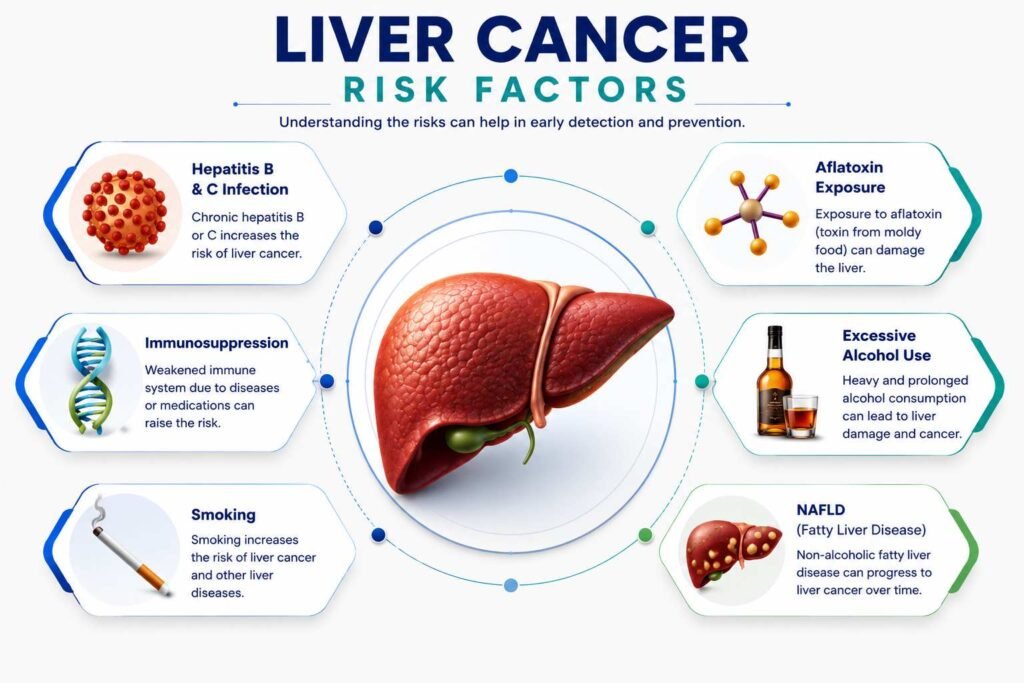
- Chronic Hepatitis B or Hepatitis C infection
- Liver cirrhosis
- Non-Alcoholic Fatty Liver Disease (NAFLD)
- Excessive alcohol consumption
- Obesity and diabetes
- Smoking
- Exposure to aflatoxins
- Genetic liver disorders such as hemochromatosis
- Family history of liver cancer
Managing these risk factors and undergoing regular screening can help detect liver cancer at an earlier stage.
Diagnosis of Liver Cancer
Early and accurate diagnosis helps determine the stage of the disease and the most appropriate treatment plan.
Your evaluation may include:
- Clinical examination and medical history
- Liver function blood tests
- Alpha-fetoprotein (AFP) tumour marker
- Ultrasound abdomen
- Triple-phase CT Scan
- MRI Liver
- PET-CT Scan (when required)
- Liver biopsy in selected cases
Accurate staging helps determine whether surgery or other advanced treatment options are appropriate.
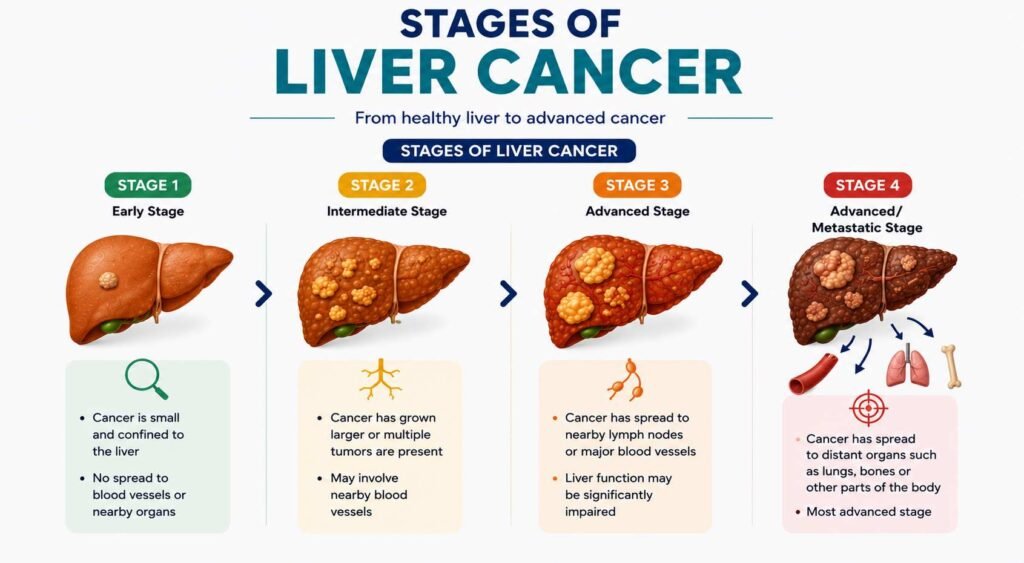
Stages of Liver Cancer
Liver cancer is generally classified into four stages:
Stage I: Cancer is confined to the liver.
Stage II: Multiple small tumours or involvement of nearby blood vessels.
Stage III: Cancer spreads to nearby lymph nodes or major blood vessels.
Stage IV: Cancer spreads to distant organs.
Early-stage liver cancer offers the highest chance of successful treatment.
Reach Out for Expert Care
Advanced Treatment Options for Liver Cancer
Treatment is personalised according to the type, stage, liver function, and overall health of the patient.
Treatment options may include:
- Liver Cancer Surgery to remove the tumour whenever feasible.
- Minimally Invasive & Robotic Surgery for selected patients, offering smaller incisions and faster recovery.
- Liver Resection for removing the affected portion of the liver.
- Chemotherapy & Targeted Therapy for advanced liver cancer.
- Immunotherapy to help the body’s immune system fight cancer.
- Liver-directed therapies such as TACE, radiofrequency ablation (RFA), or microwave ablation in selected cases.
Every treatment plan is tailored to maximise cancer control while preserving liver function and quality of life.
Why Choose Dr. Archit Pandit for Liver Cancer Treatment in Delhi?
Choosing an experienced Liver Cancer Surgeon in Delhi is essential for achieving the best possible outcomes.
- 15+ Years of Experience in gastrointestinal and hepatobiliary cancer surgery.
- 5,000+ Complex Cancer Surgeries performed.
- 10,000+ Cancer Patients Treated across Delhi, NCR, and India.
- Expertise in Robotic, Laparoscopic & Minimally Invasive Cancer Surgery.
- Multidisciplinary treatment planning with oncology specialists.
- Personalised treatment plans based on each patient’s condition.
Book a Consultation with Dr. Archit Pandit
If you have persistent abdominal pain, jaundice, unexplained weight loss, chronic hepatitis, or have been diagnosed with liver cancer, early consultation with a specialist can make a significant difference.
Dr. Archit Pandit provides comprehensive liver cancer treatment in Delhi, combining advanced surgical expertise, modern technology, and personalised cancer care to deliver the best possible outcomes.
Book your consultation today for an accurate diagnosis and personalised treatment plan from an experienced Liver Cancer Specialist in Delhi.

Our Medical Content Philosophy
The Dr. Archit Pandit Medical Content Team is dedicated to delivering trusted, evidence-based medical information that supports informed decision-making. Through rigorous research, editorial precision, and a patient-first approach, every article is developed to reflect the highest standards of clinical accuracy and excellence in surgical oncology.



 WhatsApp