
Appendix Cancer Treatment in Delhi
Appendix cancer is a rare gastrointestinal cancer that develops in the appendix, a small finger-shaped pouch attached to the beginning of the large intestine. Because it often causes few or no symptoms in its early stages, many cases are discovered during surgery for appendicitis or other abdominal conditions. When diagnosed early, however, treatment can be highly effective.
Dr. Archit Pandit, an experienced Appendix Cancer Surgeon in Delhi, provides comprehensive appendix cancer treatment in Delhi using advanced surgical techniques, Cytoreductive Surgery (CRS), HIPEC (Hyperthermic Intraperitoneal Chemotherapy), and multidisciplinary cancer care. Every treatment plan is personalised based on the type, stage, and extent of the disease to achieve the best possible outcomes.
What is Appendix Cancer?
Appendix cancer, also known as appendiceal cancer, occurs when abnormal cells grow uncontrollably in the tissues of the appendix. Although it accounts for less than 1% of all gastrointestinal cancers, it can spread to the lining of the abdomen if left untreated.
Several types of appendix cancer exist, each requiring a different treatment approach. Early diagnosis by an experienced Appendix Cancer Specialist in Delhi can significantly improve treatment outcomes and long-term survival.
Symptoms of Appendix Cancer
Appendix cancer often produces vague symptoms that can resemble common digestive disorders. Patients may experience:
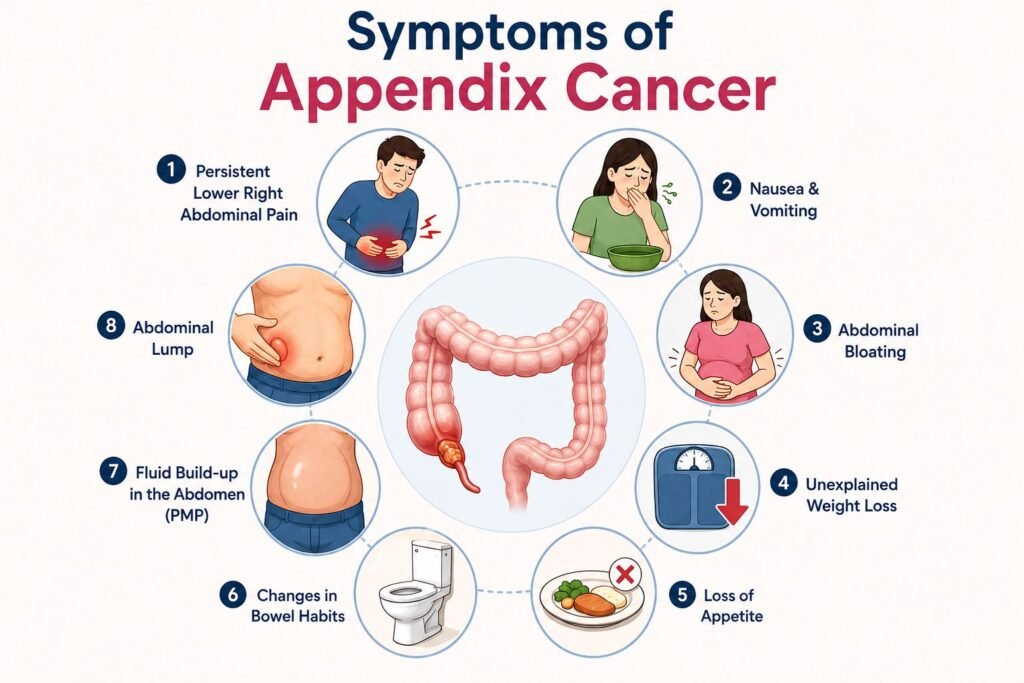
If these symptoms persist or worsen, it is important to seek evaluation from an experienced Appendix Cancer Doctor in Delhi.
Reach Out for Expert Care
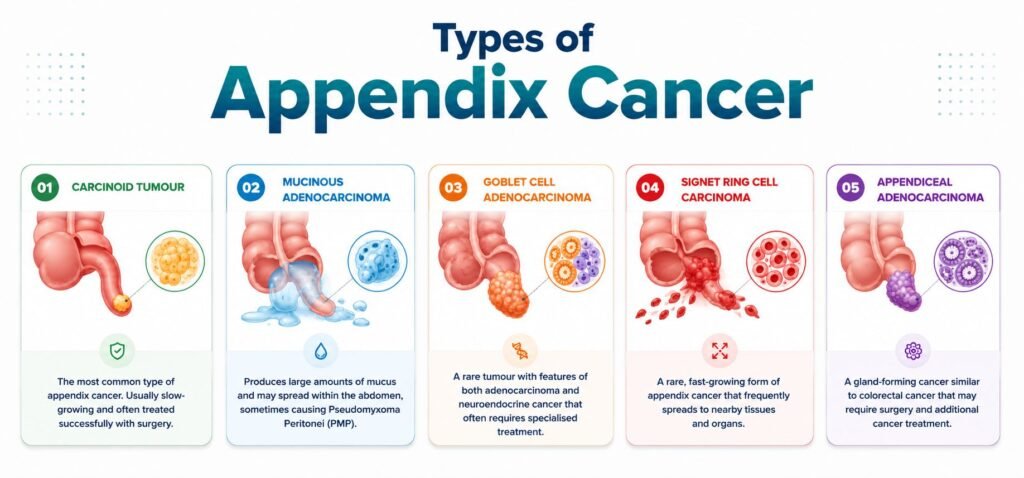
Types of Appendix Cancer We Treat
Carcinoid Tumours
The most common type of appendix cancer, usually slow-growing and often discovered during appendectomy. Small tumours may be treated with surgery alone.
Mucinous Adenocarcinoma
A mucus-producing cancer that may spread throughout the abdominal cavity and cause Pseudomyxoma Peritonei (PMP). Treatment often involves Cytoreductive Surgery (CRS) combined with HIPEC.
Goblet Cell Adenocarcinoma
A rare tumour with features of both neuroendocrine and glandular cancers. It behaves more aggressively than carcinoid tumours and often requires extensive surgery.
Signet Ring Cell Adenocarcinoma
A rare but highly aggressive appendix cancer that frequently spreads to nearby organs and usually requires multimodality treatment.
Appendiceal Adenocarcinoma
A gland-forming cancer similar to colorectal cancer that often requires surgical removal along with chemotherapy depending on the stage.
Causes & Risk Factors of Appendix Cancer
The exact cause of appendix cancer remains unknown, but several factors may increase the risk, including:
- Increasing age
- Family history of gastrointestinal cancers
- Certain inherited genetic syndromes
- Neuroendocrine tumours
- Chronic inflammation of the digestive tract
- Mucin-producing tumours of the appendix
Most patients have no obvious risk factors, making early evaluation of persistent abdominal symptoms particularly important.
Diagnosis of Appendix Cancer
An accurate diagnosis helps determine the type and stage of cancer and guides treatment planning.
Your evaluation may include:
- Detailed medical history and physical examination
- CT Scan of the abdomen and pelvis
- MRI (when required)
- Ultrasound
- Colonoscopy (to exclude colorectal disease)
- Blood tests including tumour markers (CEA, CA-125)
- Biopsy for confirmation
- Diagnostic laparoscopy or surgical exploration in selected cases
Early diagnosis offers the best opportunity for successful treatment.
Advanced Treatment Options for Appendix Cancer
Treatment depends on the type of tumour, stage of disease, and whether cancer has spread within the abdomen.
Surgery
Surgical removal of the appendix and affected tissues remains the primary treatment for most appendix cancers. Depending on the disease, treatment may involve appendectomy, right hemicolectomy, or advanced cancer surgery.
Cytoreductive Surgery (CRS) & HIPEC
For patients with Pseudomyxoma Peritonei (PMP) or advanced appendix cancer, Cytoreductive Surgery combined with HIPEC helps remove visible tumours and destroy remaining microscopic cancer cells using heated chemotherapy delivered directly into the abdominal cavity.
Chemotherapy
Systemic chemotherapy may be recommended before or after surgery or for advanced-stage appendix cancer to reduce recurrence and control disease spread.
Targeted Therapy
Selected patients with advanced or recurrent appendix cancer may benefit from targeted therapy based on the tumour’s molecular profile.
Every treatment plan is individualised using a multidisciplinary approach to maximise cancer control while preserving quality of life.
Reach Out for Expert Care
Why Choose Dr. Archit Pandit for Appendix Cancer Treatment in Delhi?
Choosing an experienced Appendix Cancer Surgeon in Delhi is essential for achieving the best possible treatment outcomes.
- 15+ Years of Experience in gastrointestinal cancer surgery.
- 5,000+ Complex Cancer Surgeries successfully performed.
- 10,000+ Cancer Patients Treated across Delhi, NCR, and India.
- Expertise in CRS, HIPEC, Robotic & Minimally Invasive Cancer Surgery.
- Comprehensive multidisciplinary cancer care.
- Personalised treatment plans for every patient.
- Advanced surgical techniques focused on faster recovery and improved outcomes.
Book a Consultation with Dr. Archit Pandit
If you have persistent abdominal pain, unexplained bloating, changes in bowel habits, or have been diagnosed with appendix cancer, early consultation with a specialist is essential.
Dr. Archit Pandit provides advanced appendix cancer treatment in Delhi, combining modern surgical expertise, HIPEC, and personalised cancer care to deliver the best possible outcomes.
Book your consultation today for an accurate diagnosis and a personalised treatment plan from an experienced Appendix Cancer Specialist in Delhi.

Our Medical Content Philosophy
The Dr. Archit Pandit Medical Content Team is dedicated to delivering trusted, evidence-based medical information that supports informed decision-making. Through rigorous research, editorial precision, and a patient-first approach, every article is developed to reflect the highest standards of clinical accuracy and excellence in surgical oncology.



 WhatsApp