
HIPEC Surgery in Delhi
Advanced Cytoreductive Surgery (CRS) with HIPEC for selected abdominal cancers. Dr. Archit Pandit provides personalised evaluation and evidence-based treatment for appendix, colorectal, ovarian, stomach and peritoneal cancers.


Quick Facts About HIPEC Surgery
Everything You Need to Know at a Glance
Specialised HIPEC Surgery for Cancers Within the Abdomen
Personalised Cytoreductive Surgery and HIPEC in Delhi
If you are looking for HIPEC surgery in Delhi, Dr. Archit Pandit provides surgical evaluation for selected cancers that have spread to the lining of the abdomen. These may include cancers of the appendix, colon, rectum, ovary or stomach, as well as pseudomyxoma peritonei and peritoneal mesothelioma.
HIPEC is not suitable for every person with abdominal cancer. It is generally considered as part of a larger cancer treatment plan after reviewing the cancer type, scans, previous treatment, extent of spread and overall health.
Dr. Archit Pandit is an AIIMS-trained surgical oncologist and Director of Surgical Oncology at Fortis Escorts, Okhla Road, New Delhi. His areas of expertise include HIPEC, gastrointestinal cancer surgery, minimally invasive cancer surgery and complex surgical oncology.
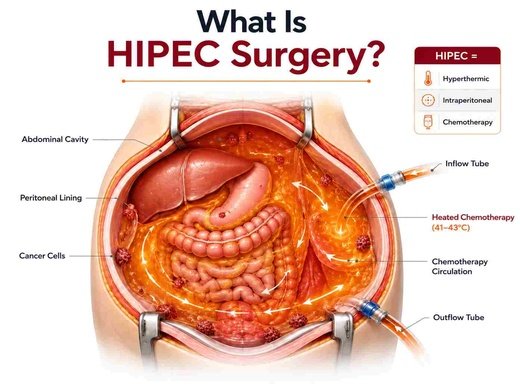
What Is HIPEC Surgery?
Advanced CRS and HIPEC surgery in Delhi by Dr. Archit Pandit for selected cancers.
HIPEC (Hyperthermic Intraperitoneal Chemotherapy) is an advanced cancer treatment performed immediately after Cytoreductive Surgery (CRS) for selected abdominal and peritoneal cancers. After removing all visible tumors, a heated chemotherapy solution is circulated throughout the abdominal cavity to target microscopic cancer cells that may remain. This approach allows the chemotherapy to act directly where the cancer has spread while limiting its exposure to the rest of the body.
HIPEC may be recommended for carefully selected patients with appendix cancer, colorectal cancer, ovarian cancer, pseudomyxoma peritonei, peritoneal mesothelioma, and selected stomach cancers. The treatment plan is personalized based on the type of cancer, the extent of disease, and the patient's overall health. In some cases, HIPEC is combined with intravenous chemotherapy before or after surgery to achieve the best possible treatment outcomes.
What Is the Peritoneum?
Understanding the Abdominal Lining
The peritoneum is a thin layer of tissue that lines the inside of the abdomen and covers many of the abdominal organs.
Cancer cells can sometimes spread across this lining and form several small or large deposits instead of one tumour. This is called peritoneal metastasis or peritoneal surface disease. Some older medical reports may use the term peritoneal carcinomatosis.
Cytoreductive surgery and HIPEC are designed for selected cancers with this type of spread.
Conditions Treated with HIPEC Surgery
HIPEC surgery in Delhi may be recommended for carefully selected patients with cancers that have spread to the lining of the abdomen (peritoneum). Dr. Archit Pandit evaluates the cancer type, extent of disease, overall health, and surgical suitability before recommending Cytoreductive Surgery (CRS) with HIPEC as part of a personalized treatment plan.
Appendix Cancer & Pseudomyxoma Peritonei
Advanced HIPEC treatment for selected appendix cancers and pseudomyxoma peritonei (PMP) with peritoneal spread.
Peritoneal Mesothelioma
Cytoreductive surgery with HIPEC for selected patients with malignant peritoneal mesothelioma.
Colon & Rectal Cancer
HIPEC surgery for selected colorectal cancers that have spread to the peritoneum and are suitable for complete tumor removal.
Ovarian Cancer
HIPEC may be recommended for selected patients with advanced ovarian cancer as part of interval cytoreductive surgery.
Stomach Cancer
Specialized HIPEC treatment for carefully selected patients with gastric cancer involving limited peritoneal spread.
Peritoneal Surface Cancers
Comprehensive treatment for selected cancers confined to the peritoneal lining using CRS and HIPEC.
How Is HIPEC Surgery Performed?
A Step-by-Step Approach to Cytoreductive Surgery (CRS) and HIPEC
Anaesthesia & Surgical Assessment
The procedure begins under general anaesthesia. The surgical team carefully examines the abdominal cavity to confirm that Cytoreductive Surgery (CRS) can be safely performed.
Cytoreductive Surgery (CRS)
The surgeon removes all visible cancer deposits from the peritoneum and affected organs whenever possible. The extent of surgery varies depending on the location and spread of the disease.
Heated Chemotherapy (HIPEC)
Once the visible cancer has been removed, heated chemotherapy is circulated throughout the abdominal cavity using a specialised perfusion system to target microscopic cancer cells.
Reconstruction & Procedure Completion
The chemotherapy solution is drained, the abdomen is carefully inspected, and any required bowel reconstruction or surgical repairs are completed before closing the incision.
Recovery & Post-Operative Monitoring
After surgery, patients are closely monitored in the recovery room or ICU if required. Pain control, kidney function, bowel activity, wound healing, and overall recovery are carefully assessed before discharge.
Begin Your HIPEC Treatment Journey
Potential Benefits of HIPEC
For carefully selected patients, cytoreductive surgery and HIPEC may provide several potential benefits.
Direct Treatment Inside the Abdomen
The heated chemotherapy comes into direct contact with the peritoneal surfaces, where microscopic cancer cells may remain.
Treatment After Visible Cancer Is Removed
HIPEC is delivered immediately after cytoreductive surgery, during the same operation.
Higher Local Drug Exposure
The abdominal cavity can be exposed to a concentrated chemotherapy solution while limiting, but not completely preventing, exposure to the rest of the body.
Better Disease Control in Selected Patients
For certain cancers and carefully selected patients, CRS with HIPEC may improve control of the cancer within the abdomen and may improve long-term outcomes.
Combined Treatment
Removal of visible cancer and delivery of heated chemotherapy take place as parts of one planned procedure.
Note: These are potential benefits and not guarantees. Results vary according to the cancer type, amount of disease, success of cytoreductive surgery and the patient’s overall health.
Recovery After HIPEC Surgery
Supporting Your Recovery After Major Cancer Surgery
Recovery after HIPEC surgery in Delhi depends on the extent of cytoreductive surgery, the organs treated, and your overall health. Most patients stay in the hospital for 7–14 days and receive pain management, IV fluids, nutritional support, and early mobilisation. Full recovery usually takes 6–12 weeks, with regular follow-up to monitor healing and recovery.
It is normal to experience temporary fatigue, reduced appetite, or changes in bowel habits after surgery. However, contact Dr. Archit Pandit immediately if you develop fever, severe abdominal pain, repeated vomiting, breathing difficulty, wound discharge, heavy bleeding, or difficulty eating and drinking. Early medical attention helps prevent complications and supports a smoother recovery.
Why Choose Dr. Archit Pandit for HIPEC Surgery in Delhi?
Expert HIPEC & Peritoneal Cancer Care in Delhi
HIPEC & CRS Expertise
Specialised experience in Cytoreductive Surgery (CRS) with HIPEC for selected peritoneal and advanced abdominal cancers.
AIIMS-Trained Surgical Oncologist
Advanced surgical oncology training from AIIMS, delivering evidence-based cancer care with modern techniques.
Director of Surgical Oncology
Leads the Department of Surgical Oncology at Fortis Escorts, Okhla Road, New Delhi.
Multidisciplinary Cancer Care
Treatment planning with experts in medical oncology, radiology, pathology, anaesthesia, and nutrition.
Advanced GI Cancer Surgery
Expertise in gastrointestinal, colorectal, appendix, stomach, and other complex abdominal cancer surgeries.
Personalised Treatment Planning
Every HIPEC treatment plan is tailored to the cancer type, disease extent, overall health, and individual goals.
Take the Next Step Towards Personalised HIPEC Care
Minimally invSpecialist Evaluation for Peritoneal and Advanced Abdominal Cancerasive, patient-focused surgical care
If you have been diagnosed with cancer involving the lining of the abdomen, a detailed surgical evaluation can help determine whether cytoreductive surgery and HIPEC should be considered.
Dr. Archit Pandit reviews the cancer type, pathology, scans, previous treatment, extent of abdominal disease and overall health before recommending a treatment plan.
If HIPEC is not suitable, other surgical or medical treatment options may be discussed with the multidisciplinary cancer team.
Frequently Asked Questions
Everything you need to know before your consultation
Is HIPEC the same as regular chemotherapy? expand_more
No. HIPEC is delivered directly inside the abdomen during surgery, while regular intravenous chemotherapy travels throughout the body through the bloodstream.
Is HIPEC a surgery or chemotherapy? expand_more
HIPEC itself is a method of delivering chemotherapy. The complete treatment usually includes cytoreductive surgery followed by HIPEC during the same operation.
Which cancers can be treated with HIPEC? expand_more
It may be considered for selected appendix, colorectal, ovarian, stomach and pseudomyxoma peritonei and peritoneal mesothelioma.
Will I need chemotherapy after HIPEC? expand_more
It’s possible. Some patients need intravenous chemotherapy before or after HIPEC depending on the cancer type, pathology, previous treatment and response.
Is HIPEC suitable for everyone with peritoneal metastasis? expand_more
No. Suitability depends on the cancer type, extent of disease, spread outside the abdomen, possibility of removing the visible cancer and the patient’s fitness for major surgery.
Can HIPEC cure stage 4 cancer? expand_more
HIPEC cannot cure every stage 4 cancer. In a small number of carefully selected patients whose cancer is limited mainly to the peritoneum and can be completely removed, treatment may provide long-term disease control. Individual outcomes vary considerably.