
Whipple Procedure in Delhi
The Whipple procedure (pancreaticoduodenectomy) is a complex surgery used to treat certain pancreatic, bile duct, and nearby digestive cancers. Dr. Archit Pandit offers evaluation for the Whipple procedure in Delhi, with treatment planning based on the tumour’s extent, operability, and the patient’s overall health.

Book an Appointment
Our team will get back to you within a few hours
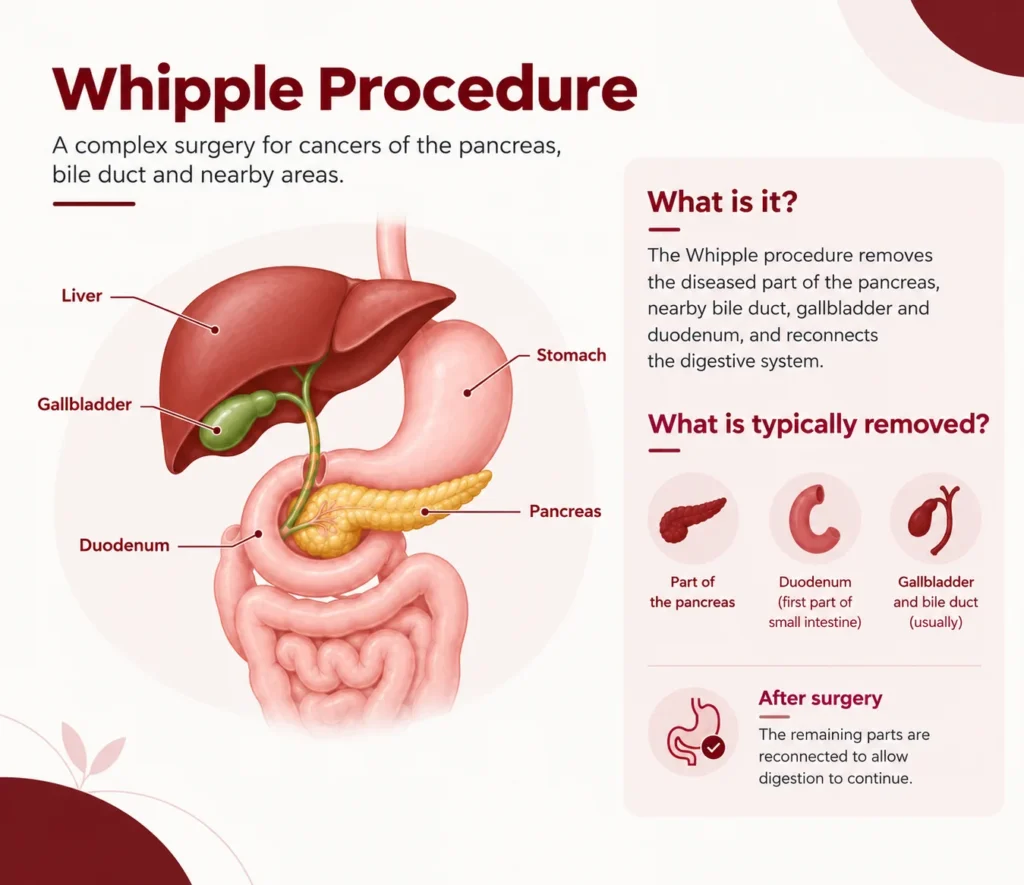
What is a Whipple Procedure?
Understanding the surgery
Whipple procedure is used to treat certain cancers and other conditions affecting the pancreas, bile duct, and the first part of the small intestine. It primarily involves removing the head of the pancreas, where several important digestive organs and ducts meet.
During the surgery, the surgeon typically removes the head of the pancreas, the duodenum (the first part of the small intestine), the gallbladder, part of the bile duct, and nearby lymph nodes. In some cases, a portion of the stomach may also be removed. The surgeon then reconnects the remaining organs to allow food and digestive fluids to pass through the digestive system.
In a pylorus-preserving Whipple procedure, the stomach and its outlet (the pylorus) may be retained. The exact tissues removed depend on the tumour and the operation planned by the surgical team.
The procedure may be performed as open surgery or, in selected cases, using minimally invasive laparoscopic or robotic techniques. The approach depends on the tumour's location, its extent, the patient's overall health, and the surgical team's assessment.
Which Conditions Require Whipple Procedure?
The Whipple surgery may be recommended when a tumour or other disease affects the head of the pancreas or nearby structures and can be treated surgically. Common conditions include:
-
Pancreatic cancer: Particularly tumours located in the head of the pancreas that can be removed surgically.
-
Ampullary cancer: Cancer affecting the ampulla of Vater, where the bile duct and pancreatic duct empty into the small intestine.
-
Bile duct cancer: Selected cancers affecting the lower part of the bile duct near the pancreas.
-
Duodenal cancer: Tumours involving the first part of the small intestine.
-
Pancreatic neuroendocrine tumours: Certain tumours arising from hormone-producing cells in the pancreas.
-
Pancreatic cysts or other tumours: Selected lesions that require surgical removal because of their characteristics or potential risk.
-
Chronic pancreatitis: In specific cases where the disease causes persistent problems involving the head of the pancreas and nearby structures.
The decision to perform Whipple surgery depends on detailed imaging, the tumour's location and extent, whether it can be completely removed, and the patient's ability to undergo major surgery. Some patients may require chemotherapy or other treatment before or after surgery.

Diagnosis Before Whipple Surgery in Delhi
Tests and Medical Assessments to Determine Surgical Eligibility
Before recommending a Whipple procedure in Delhi, the treating team reviews the diagnosis and assesses whether surgery is an appropriate option. The evaluation may include a clinical examination, blood tests, contrast-enhanced CT or MRI scans, and other investigations such as endoscopic ultrasound or biopsy when indicated. The tests required vary by patient and suspected condition.
The team also considers nutrition, existing medical conditions, fitness for major surgery, and whether treatment such as chemotherapy is needed before surgery. Patients should bring their scan reports, pathology results, medication list, and relevant medical records to the consultation.
What Happens Before, During, and After the Surgery
Our streamlined 6-step process ensures you always know what comes next
Anaesthesia and surgical access
The patient receives general anaesthesia. The surgeon accesses the abdominal organs through an incision or, in selected cases, small incisions for minimally invasive surgery.
Removal of the affected organs
The surgeon removes the head of the pancreas, duodenum, gallbladder, and the affected portion of the bile duct. Nearby lymph nodes are also removed for examination. A portion of the stomach may be removed if necessary.
Examination of the surgical area
The surgeon assesses the affected area and removes the tumour along with surrounding tissue as required to achieve the best possible cancer clearance.
Reconstruction of the digestive system
The remaining pancreas, bile duct, and stomach or small intestine are reconnected to allow digestive juices and food to pass through the digestive system.
Laboratory examination
The removed tissues and lymph nodes are sent for pathological examination to determine the tumour type, assess the surgical margins, and check for cancer involvement.
Postoperative monitoring
The patient is monitored in the hospital for pain, bleeding, infection, digestive function, and other potential complications. Further treatment may be recommended based on the pathology results and overall diagnosis.
Book a consultation for personalised evaluation.
Recovery After Whipple Surgery
Hospital Stay, Diet, and Healing After the Procedure
Recovery after the Whipple procedure varies depending on the patient's overall health, the extent of surgery, and whether complications develop. Whipple surgery recovery includes:
-
Hospital monitoring: The medical team monitors pain, wound healing, digestive function, and signs of infection or other complications.
-
Gradual return to eating: Patients usually resume eating gradually, starting with small amounts of food and progressing as tolerated. Smaller, frequent meals may help manage digestive discomfort.
-
Pain management and mobility: Medication helps control pain, while gentle movement and walking support recovery and reduce the risk of blood clots.
-
Digestive support: Some patients may require pancreatic enzyme supplements to improve digestion and nutrient absorption.
-
Follow-up appointments: Regular follow-ups help assess healing, review pathology results, monitor nutritional status, and plan further cancer treatment if needed.
-
Long-term monitoring: Some patients experience changes in bowel habits, weight, blood sugar levels, or digestion and may need ongoing dietary guidance or medical support.
Hospital stay and return to normal activities vary. Patients should follow their surgical team’s advice on wound care, activity, diet, medication, and when to seek urgent medical attention. Persistent vomiting, fever, worsening abdominal pain, jaundice, or signs of wound infection should be reported promptly to the treating team.
Why Choose Dr. Archit Pandit For Your Whipple Procedure in Delhi?
Experienced Surgical Oncology Care and Personalised Treatment Planning
15+ Years of Experience
Extensive experience in surgical oncology and the management of complex cancers.
10,000+ Cancer Surgeries
Experience in a wide range of cancer surgeries and complex surgical procedures.
Advanced Surgical Techniques
Expertise in robotic, laparoscopic, and minimally invasive cancer surgery, where appropriate.
Expertise in Complex Cancer Surgery
Surgical treatment planning for pancreatic cancer and other cancers requiring specialised surgical approaches.
International Training
Advanced training at AIIMS, New Delhi, and fellowships in Japan and South Korea.
Personalised Treatment Planning
Recommends suitable surgical options based on the tumour's location, stage, extent of disease, and the patient's overall health.
Expert Care for the Whipple Procedure in Delhi
The Whipple procedure is a complex surgery used to treat certain cancers affecting the pancreas, bile duct, and nearby organs. Understanding the procedure, its potential risks, and the recovery process can help patients make informed decisions about their treatment.
Dr. Archit Pandit can help patients understand their diagnosis, evaluate whether Whipple surgery may be appropriate, and discuss available treatment options based on their condition. Patients should discuss the potential benefits, risks, and expected recovery with their surgical oncologist before making a treatment decision.
If you are seeking an evaluation for Whipple surgery in Delhi, arrange a consultation by filling out the appointment form or call 7468922222. Bring relevant imaging, pathology reports, blood test results, and details of any treatment already received so the team can review your case.
Frequently Asked Questions
Everything you need to know before your consultation
1. What is the average cost of Whipple surgery in India? expand_more
The cost of Whipple surgery varies depending on the hospital, the complexity of the surgery, and the length of the hospital stay. Your doctor can provide an estimate after reviewing your reports.
2. What is the Whipple surgery survival rate? expand_more
The chances of recovery depend on the type and stage of cancer, whether the tumour can be completely removed, and your overall health. Your doctor can explain your expected outcome based on your condition.
3. How long does Whipple surgery take? expand_more
Whipple surgery usually takes around 4–8 hours. Hospital stay and recovery time vary depending on your health and how well you heal after surgery.
4. What should you expect after Whipple surgery? expand_more
Recovery involves hospital monitoring, gradual changes to your diet, and regular follow-up visits. Some patients may need digestive enzyme supplements or additional cancer treatment.
5. Is Whipple surgery safe? expand_more
Whipple surgery is a major operation and carries risks such as bleeding, infection, and digestive problems. Your surgeon will explain the possible risks and benefits before recommending the procedure.
6. How can I book an appointment with Dr. Archit Pandit for Whipple surgery in Delhi? expand_more
You can visit Dr. Archit Pandit's official website or search for Dr. Archit Pandit on Google to find his clinic details and appointment information. Carry your medical reports and scan results for your consultation.
7. Who is eligible for Whipple surgery? expand_more
Eligibility depends on the tumour’s location and extent, whether it can be removed safely, whether the cancer has spread, and the patient’s ability to undergo major surgery. Imaging, laboratory tests, and other assessments help the specialist team decide whether surgery is appropriate. Some patients may need treatment before surgery, while others may be advised to consider different options.