
Breast-Conserving Surgery vs Mastectomy: Understanding the Difference
Breast-conserving surgery and mastectomy are two surgical options for treating breast cancer. Breast-conserving surgery removes the cancer along with a margin of surrounding tissue, while mastectomy involves removing the entire breast. The choice depends on factors such as tumour size, cancer stage, breast size, and patient preference. Both options may require additional treatment depending on the individual case.
What Is Breast-Conserving Surgery?
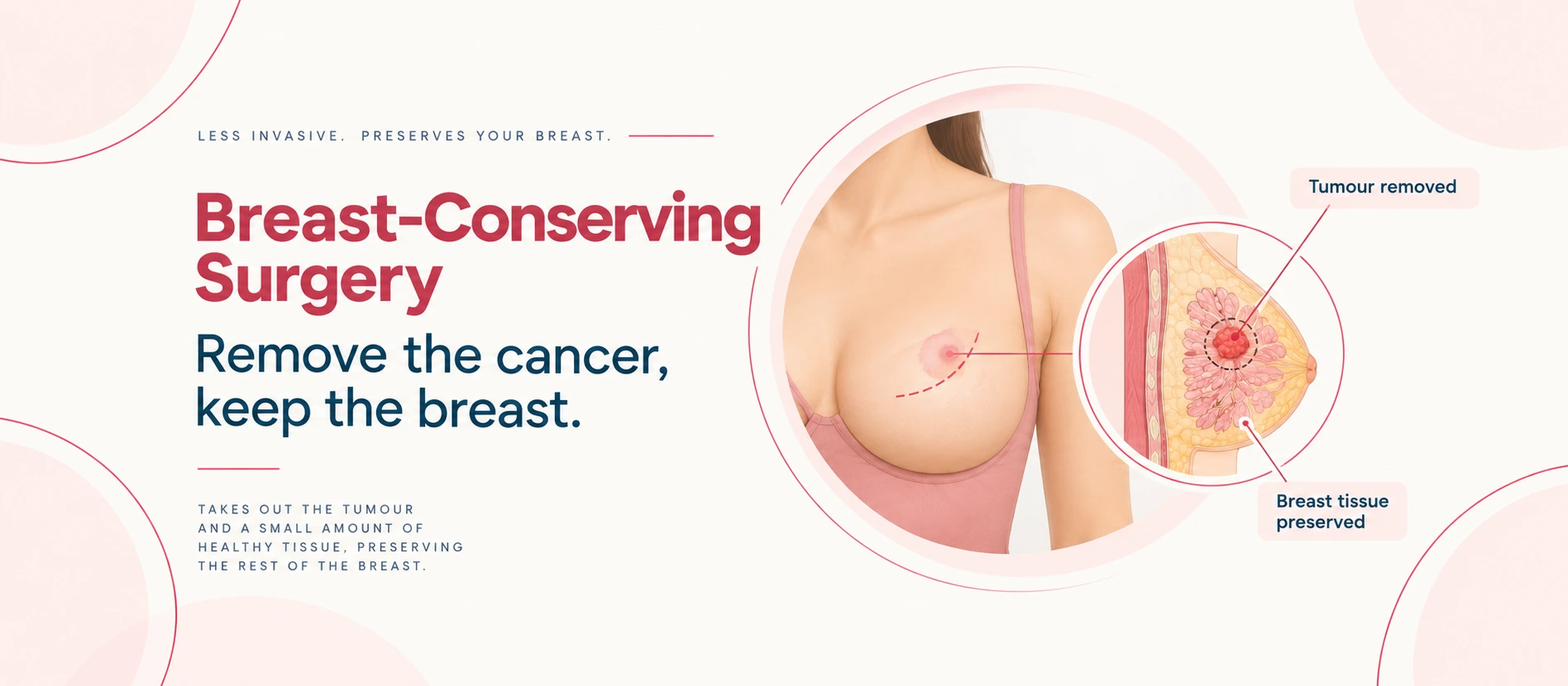
Breast-conserving surgery (BCS), also known as a lumpectomy or breast conservation surgery, is a type of breast cancer surgery that removes the cancerous tumour along with a small margin of surrounding healthy tissue while preserving most of the breast.
It is commonly used to treat early-stage breast cancer when the tumour can be completely removed without removing the entire breast. The goal of breast-conserving surgery is to remove the breast cancer while maintaining the natural shape and appearance of the breast as much as possible.
The amount of tissue removed depends on the tumour’s size, location, and extent. In some cases, oncoplastic breast surgery may be performed to improve the breast’s appearance after tumour removal.
Radiation therapy is usually recommended after breast-conserving surgery to reduce the risk of cancer recurrence in the treated breast. The need for additional treatment depends on the biopsy results, surgical margins, and other cancer characteristics.
What Is a Mastectomy?
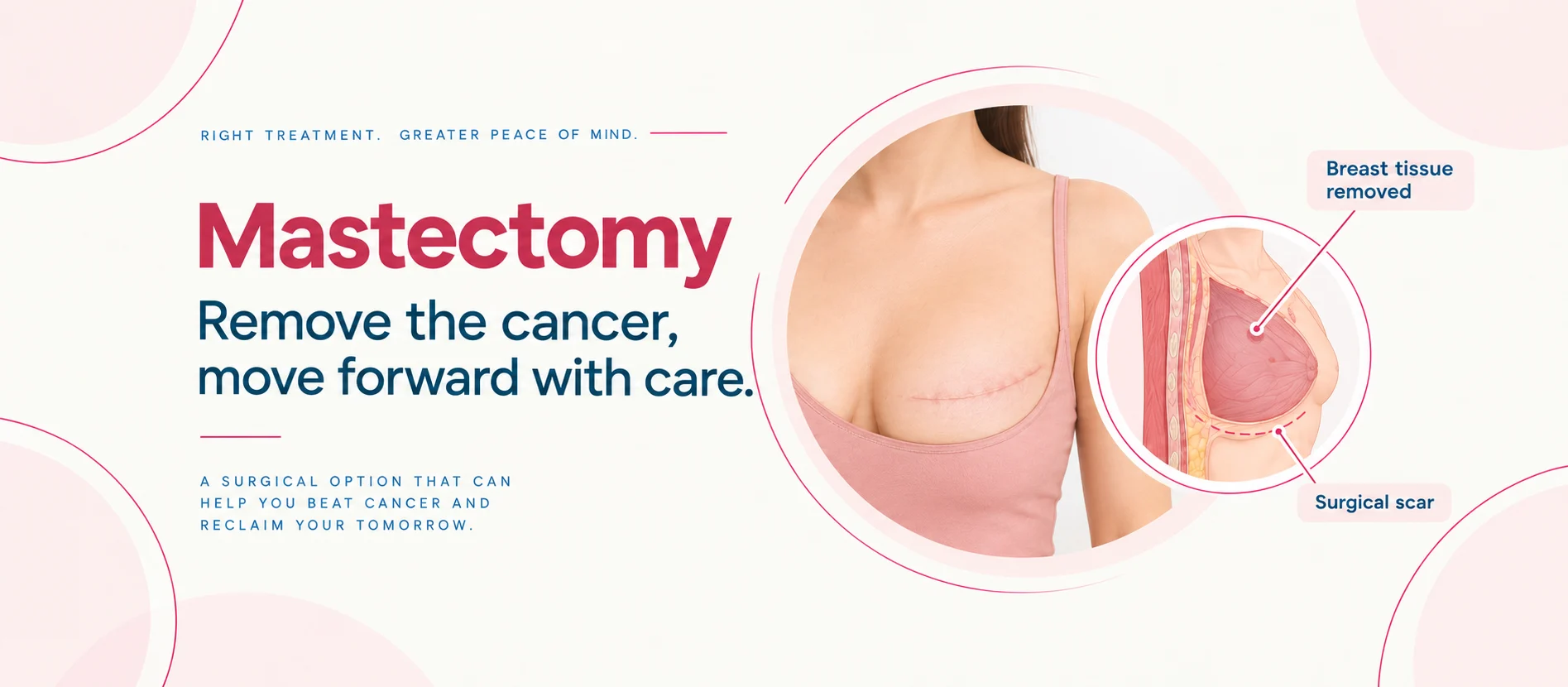
A mastectomy is a type of breast cancer surgery in which the entire breast tissue is removed to treat breast cancer. It may be recommended when the cancer is extensive, affects multiple areas of the breast, or cannot be completely removed through breast-conserving surgery.
Mastectomy may also be considered for patients with certain inherited genetic risks or those who prefer this option after discussing their treatment choices with a breast surgeon. Different types of mastectomy are available, including total mastectomy, skin-sparing mastectomy, and nipple-sparing mastectomy.
The type of breast surgery depends on the extent of the cancer, its location, and whether the skin or nipple can safely be preserved. Lymph node surgery may also be performed separately when needed to assess or treat cancer spread.
After a mastectomy, patients may choose breast reconstruction to restore the breast’s shape, either during the same operation or later. Some may prefer an external breast prosthesis or no reconstruction.
Radiation therapy, chemotherapy, or other breast cancer treatments may still be required depending on the tumour characteristics and lymph node involvement. The treatment plan is individualised to support effective cancer treatment and long-term care.
Lumpectomy vs Mastectomy: Key Differences
Lumpectomy and mastectomy are both used to treat breast cancer, but they differ in the amount of breast tissue removed, breast appearance, and the need for additional treatment. For eligible patients with early-stage breast cancer, breast-conserving surgery followed by radiation therapy can offer survival outcomes comparable to mastectomy.
The main differences include:
|
Factor |
Breast-Conserving Surgery (Lumpectomy) |
Mastectomy |
|
Tissue removed |
Tumour and a margin of surrounding tissue |
Entire breast tissue |
|
Breast appearance |
Most of the breast is preserved |
Entire breast is removed; reconstruction is optional |
|
Radiation therapy |
Usually recommended |
May be needed in certain cases |
|
Recovery |
Generally shorter for surgery alone |
May take longer, especially with reconstruction |
|
Further surgery |
May be needed if margins are not clear |
Depends on surgical findings and treatment needs |
|
Cancer recurrence |
Cancer may return in the treated breast |
Cancer may return in the chest wall or nearby areas |
Breast-Conserving Surgery in Delhi: The Eligibility Criteria
Breast-conserving surgery in Delhi may be suitable for patients with breast cancer whose tumour can be completely removed while preserving most of the breast. A breast cancer surgeon evaluates the tumour’s size, location, stage, and the patient’s overall health to determine whether breast conservation is an appropriate treatment option.
Factors that determine eligibility for breast-conserving surgery include:
-
Tumour size: The breast cancer tumour can be removed without removing too much healthy breast tissue.
-
Cancer location: The tumour can be removed with clear surgical margins.
-
Breast size and shape: Enough healthy tissue can remain to maintain an acceptable breast appearance.
-
Cancer extent: The disease can be adequately treated with breast-conserving surgery.
-
Radiation therapy: The patient can receive radiation therapy if required after surgery.
-
Overall health: Medical history and individual treatment needs support breast preservation.
Consulting an experienced breast cancer surgeon in Delhi can help patients understand their eligibility for lumpectomy, breast conservation surgery, and other breast cancer treatment options.
When Is a Mastectomy Recommended?
A mastectomy is recommended when removing the entire breast offers a more appropriate treatment approach than breast-conserving surgery. A breast surgeon may suggest mastectomy when the cancer cannot be completely removed while preserving enough healthy breast tissue or when other medical factors influence the treatment decision.
Common reasons for recommending mastectomy include:
-
Large breast cancer tumour: The tumour is large relative to the breast, making breast conservation difficult.
-
Multiple cancer areas: Cancer affects different areas of the breast and cannot be suitably treated with breast-conserving surgery.
-
Unclear surgical margins: Further breast surgery cannot adequately remove the remaining cancer.
-
Radiation limitations: The patient cannot safely receive radiation therapy when it is required.
-
Inherited breast cancer risk: Certain genetic mutations may increase the risk of developing breast cancer in the future.
-
Personal preference: The patient chooses mastectomy after discussing the benefits, risks, and alternatives with the surgeon.
Breast reconstruction may be considered after mastectomy to restore the breast’s shape. However, removing the entire breast does not always eliminate the need for radiation therapy, chemotherapy, or other breast cancer treatments.
What Factors Should You Consider When Choosing Between the Two?
Choosing between breast-conserving surgery and mastectomy depends on the type and extent of breast cancer, the need for additional treatment, expected recovery, and personal preferences. A breast cancer specialist can explain the benefits and limitations of both procedures to help patients make an informed treatment decision.
Important factors to consider when choosing breast cancer surgery include:
-
Cancer stage and tumour size: The size, location, and spread of the tumour help determine which breast surgery is suitable.
-
Cancer treatment plan: Breast-conserving surgery usually involves radiation therapy, while some patients undergoing mastectomy may also need radiation or chemotherapy.
-
Risk of recurrence: Both breast-conserving surgery and mastectomy carry a risk of cancer returning. The risk depends on the cancer’s characteristics and treatment received.
-
Breast appearance: Breast conservation preserves most natural breast tissue, while breast reconstruction may restore the breast’s shape after mastectomy.
-
Recovery and healing: Recovery time varies depending on the procedure, individual health, and whether reconstruction is performed.
-
Medical history: Previous radiation treatment, existing health conditions, and inherited genetic risk may influence the choice of breast cancer surgery.
-
Personal preferences: Body image, emotional well-being, lifestyle, and comfort with the expected surgical outcome are important considerations.
Before choosing between lumpectomy and mastectomy, discuss the available breast cancer treatment options with your surgeon. An individualised treatment plan can help balance effective cancer removal, the need for additional treatment, and long-term quality of life.
Taking the Next Step in Your Breast Cancer Treatment Journey
Choosing between breast-conserving surgery and mastectomy depends on the type and stage of breast cancer, its extent, and individual treatment needs. Understanding the benefits, limitations, and recovery associated with each procedure can help patients make informed decisions
If you are looking for a renowned breast cancer surgeon in Delhi, consult Dr. Archit Pandit to discuss your diagnosis, explore suitable surgical options, and develop a personalised treatment plan that prioritises your long-term health and quality of life.

 WhatsApp