
Rectal Cancer Treatment in Delhi
Treatment of rectal cancer depends on the cancer stage, tumour location, and the patient's overall health. Treatment may include surgery, chemotherapy, or radiation therapy. Dr. Archit Pandit provides surgical oncology care for rectal cancer in Delhi, based on individual clinical needs.
Book Appointment
Connect with Dr. Archit Pandit for expert rectal cancer treatment in Delhi
What Is Rectal Cancer?
Understanding the Condition
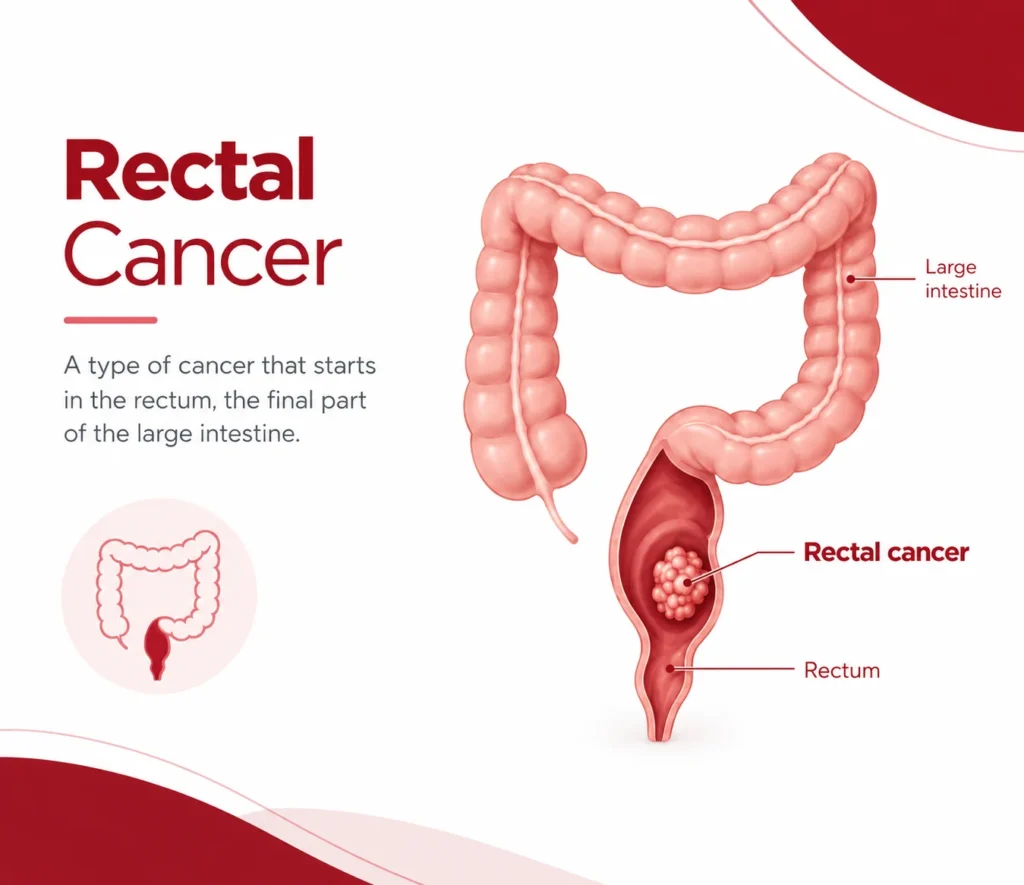
Rectal cancer develops when abnormal cells in the rectum's inner lining grow uncontrollably and form a tumour. The rectum is the final section of the large intestine, where stool is stored before being passed out of the body. Most rectal cancers are adenocarcinomas, which develop from glandular cells in the rectal lining.
Some rectal cancers develop from certain types of polyps over time, although not all polyps become cancerous. As the disease progresses, the tumour may grow deeper into the rectal wall, spread to nearby lymph nodes or involve distant organs such as the liver and lungs.
The stage and location of rectal cancer help determine the most appropriate treatment. Early-stage tumours may be suitable for local excision or other surgical procedures, while more advanced disease may require a combination of surgery, chemotherapy and radiation therapy. Selected patients may also be considered for other treatment approaches based on the tumour's characteristics.
Early diagnosis and accurate staging help establish the extent of the disease and guide treatment planning according to the patient's clinical condition.
What Are the Symptoms of Rectal Cancer?
Rectal cancer can cause changes in bowel habits and other symptoms. However, these symptoms may also occur with non-cancerous conditions, so medical evaluation is important when they persist.
Blood in the stool
Rectal bleeding may appear as bright red blood on toilet paper, in the toilet bowl or mixed with stool. It should not automatically be attributed to piles or haemorrhoids.
Changes in bowel habits
Persistent constipation, diarrhoea or a noticeable change in the usual frequency of bowel movements may indicate a problem in the rectum.
Incomplete bowel emptying
A continuing urge to pass stool after using the toilet may occur when a tumour affects the rectum.
Abdominal discomfort or rectal pain
Some people experience abdominal cramps, pressure, discomfort around the anus or pain during bowel movements.
Changes in stool shape
Stools may become narrower than usual, although this symptom alone does not confirm rectal cancer.
Unexplained weight loss
Losing weight without changes in diet or physical activity can sometimes occur as cancer progresses.
Persistent fatigue or weakness
Ongoing bleeding may lead to anaemia, which can cause tiredness, weakness, dizziness or shortness of breath.
Mucus in the stool
Some people may notice mucus in their bowel movements, particularly when accompanied by other rectal symptoms.
What Causes Rectal Cancer?
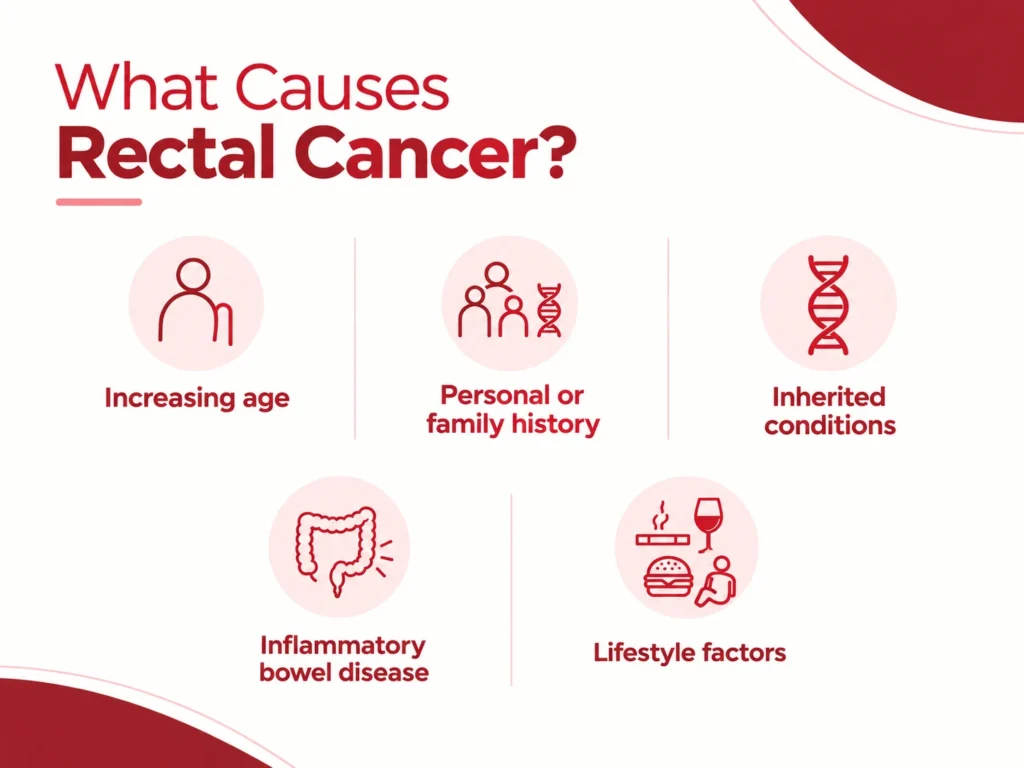
Rectal cancer does not have one single cause. Several factors may increase the likelihood of developing the disease.
-
Increasing age: The risk of rectal cancer generally increases with age, although younger adults can also develop the disease.
-
Personal or family history: People who have previously had colorectal cancer or certain types of polyps, or who have close relatives with colorectal cancer, may have a higher risk.
-
Inherited genetic conditions: Conditions such as Lynch syndrome and familial adenomatous polyposis (FAP) can increase the likelihood of developing colorectal cancer, sometimes at a younger age.
-
Inflammatory bowel disease: Long-standing ulcerative colitis or Crohn's disease affecting the colon can increase colorectal cancer risk.
-
Smoking and alcohol consumption: Smoking and excessive alcohol intake are associated with an increased risk of colorectal cancer.
-
Excess body weight and physical inactivity: Having excess body weight and engaging in limited physical activity may contribute to a higher risk.
-
Dietary factors: A diet high in processed meat, such as bacon, sausages, and ham, is associated with an increased risk of colorectal cancer.
Rectal Cancer Treatment Options in Delhi
Types of Treatments
Rectal cancer treatment depends on the tumour's stage, location, and extent. Surgery is central to treatment for many patients, while chemotherapy and radiation may be needed as part of a combined approach.
Rectal Cancer Surgery
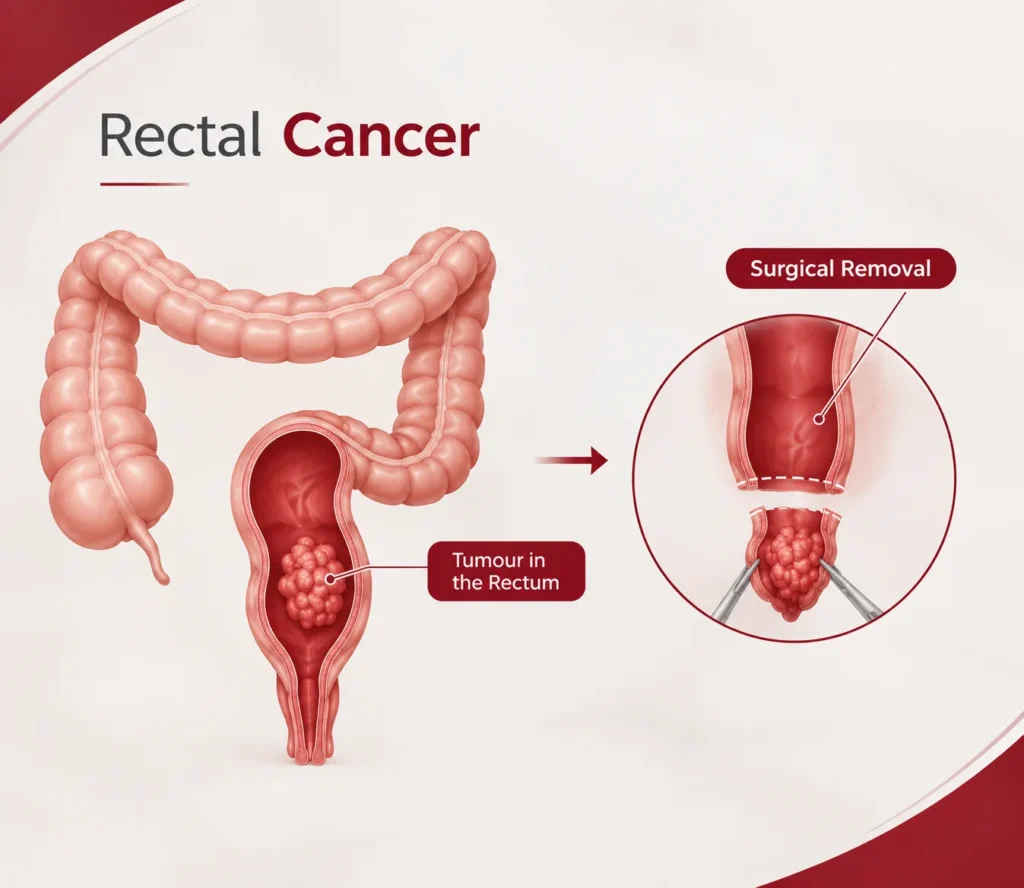
Surgery removes the cancerous tissue and may include nearby lymph nodes.
-
Local excision: Removes selected early-stage tumours through the anus when clinically appropriate.
-
Low Anterior Resection (LAR): Removes the affected rectal section while preserving the anus when feasible.
-
Abdominoperineal Resection (APR): Removes the rectum and anus when the tumour's location or extent makes sphincter preservation unsuitable. The procedure requires a permanent colostomy.
-
Total Mesorectal Excision (TME): Removes the rectum and surrounding mesorectal tissue containing lymph nodes. It is an important component of many rectal cancer operations.
Laparoscopic and Robotic Rectal Cancer Surgery
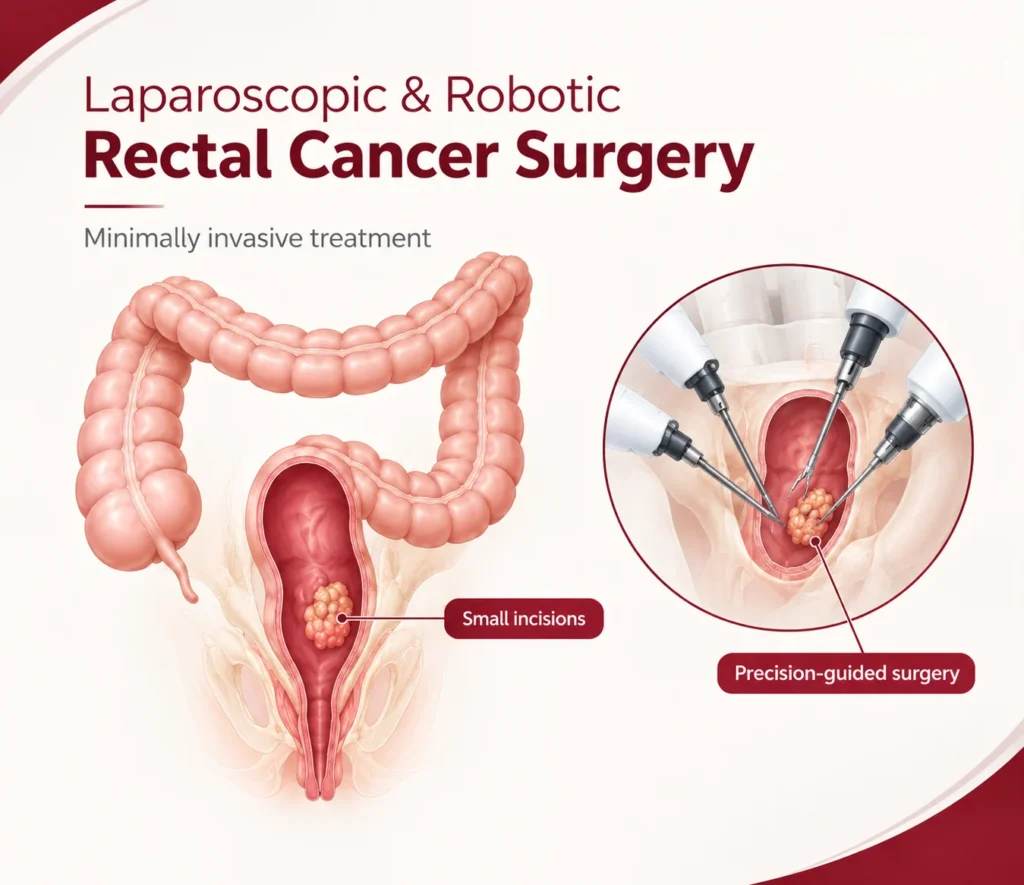
Laparoscopic and robotic-assisted surgery are minimally invasive approaches that may be suitable for selected patients with rectal cancer.
Laparoscopic surgery uses a camera and specialised instruments inserted through small incisions, while robotic-assisted surgery allows the surgeon to control specialised instruments with a magnified view and precise movements.
These approaches may offer smaller incisions and support recovery in suitable cases.
The choice between open, laparoscopic and robotic-assisted surgery depends on the tumour's characteristics, the complexity of the procedure and the likelihood of removing the cancer safely and completely.
Chemotherapy and Radiation Therapy for Rectal Cancer
Chemotherapy and radiation therapy may be used alongside surgery depending on the stage and characteristics of rectal cancer. For locally advanced disease, these treatments may be recommended before surgery to control the tumour and improve local cancer control. Chemotherapy may also be advised after surgery when findings indicate a higher risk of recurrence.
For advanced or recurrent rectal cancer, targeted therapy or immunotherapy may be considered for selected patients based on tumour biomarkers, molecular test results and clinical suitability.
Why Choose Dr. Archit Pandit for Rectal Cancer Treatment in Delhi?
Expert, minimally invasive surgical care built around precision, safety, and faster recovery.
Choosing the right surgical oncologist is important when considering rectal cancer treatment. Dr. Archit Pandit combines surgical oncology experience, advanced training, and modern surgical techniques to plan treatment based on the cancer stage, tumour location, overall health, and individual needs.
-
15+ Years of Experience: Experience in surgical oncology and the management of complex cancers.
-
10,000+ Cancer Surgeries: Experience across a wide range of cancer surgeries and complex surgical procedures.
-
Advanced Surgical Techniques: Expertise in robotic-assisted, laparoscopic, and minimally invasive cancer surgery, where appropriate.
-
Expertise in Complex Cancer Surgery: Evaluates surgical options for rectal cancer, including procedures that aim to remove the tumour while preserving bowel function when possible.
-
International Training: Advanced training at AIIMS, New Delhi, and fellowships in Japan and South Korea.
-
Personalised Treatment Planning: Recommends suitable treatment based on tumour location, cancer stage, imaging findings, and whether chemotherapy or radiation therapy may be needed before or after surgery.
Discuss Your Rectal Cancer Treatment Options
Dr Archit Pandit is a surgical oncologist who evaluates and provides surgical care for patients with colorectal cancer. Treatment recommendations are based on diagnostic findings, tumour characteristics and the patient's overall health.
Patients should discuss the available treatment options, expected benefits, possible risks and recovery requirements during their consultation.
Frequently Asked Questions
Everything you need to know before your consultation
Is robotic surgery available for rectal cancer? expand_more
Robotic-assisted surgery may be an option for selected patients. Suitability depends on the tumour, the planned operation and the patient's clinical condition.
How long does recovery from rectal cancer surgery take? expand_more
Recovery varies according to the procedure, the patient's health and any additional treatment. The treating team will advise on hospital stay, activity, diet and return to daily routines.
Does rectal cancer surgery always require a colostomy? expand_more
No. Some operations allow the bowel to be reconnected. A temporary stoma may be needed in certain cases, while a permanent colostomy is required after an abdominoperineal resection.
What does rectal cancer feel like? expand_more
Rectal cancer may cause rectal bleeding, changes in bowel habits, a feeling that the bowel has not emptied completely, rectal discomfort, or persistent abdominal pain. Some people may also experience unexplained weight loss or fatigue. Early rectal cancer may not cause noticeable symptoms, so persistent changes or bleeding should be evaluated by a doctor.
What is the average cost of rectal cancer treatment in Delhi? expand_more
The cost of rectal cancer treatment in Delhi depends on the cancer stage, type of surgery, hospital stay, and whether chemotherapy or radiation therapy is needed. Consult a surgical oncologist for a personalised treatment plan and cost estimate.
How can I consult Dr. Archit Pandit for rectal cancer treatment in Delhi? expand_more
Visit Dr. Archit Pandit's official website for current appointment and contact details. Bring available biopsy, colonoscopy, and imaging reports to help the doctor assess your case.

Dr. Archit Pandit
Dr. Archit Pandit is a Surgical Oncologist and Director & Head of the Department of Surgical Oncology at Fortis Escorts Hospital, New Delhi. With over 15 years of clinical experience, he specialises in the surgical management of gastrointestinal, thoracic, breast, gynaecological, head and neck, and complex cancers. He is trained at AIIMS, New Delhi, with advanced fellowship training in surgical oncology in Japan and colorectal cancer in South Korea. His expertise includes robotic cancer surgery, laparoscopic surgery, HIPEC, cytoreductive surgery, and minimally invasive cancer surgery.
This content is reviewed by Dr. Archit Pandit
 WhatsApp