
When Is Surgery Needed for Colon Cancer?
Colon cancer develops when abnormal cells grow in the large intestine, sometimes affecting normal bowel function. But does every case require surgery? From understanding its causes and symptoms to exploring cancer stages and surgical options, knowing when colon cancer surgery in Delhi becomes necessary can help recognise the right time to seek treatment.
Understanding Colon Cancer
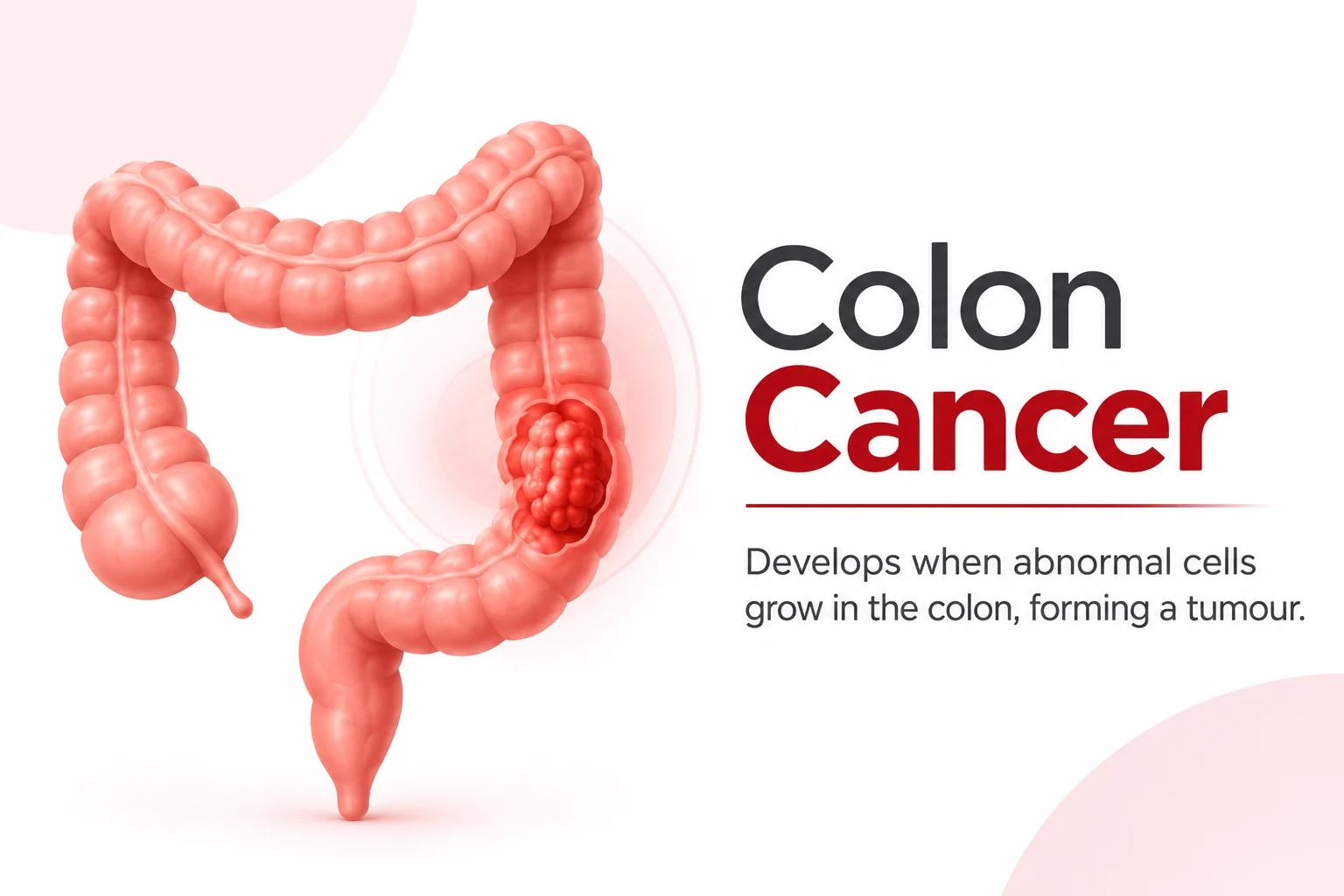
Colorectal Cancer (Colon Cancer) is the name of cancer that arises from the large bowel or the colon. The disease starts when irregular cells start to multiply in the inner layer of the colon and develop a tumor. Most of the time, the cancer originates from small growths in the colon, and some of them turn into cancer after some time.
The main function of the colon is to extract water and salts from the food we eat and form the stools. Tumor development affects normal intestinal function, especially as the tumor grows.
Colon cancer may develop in any part of the colon. The parts of the colon include the ascending colon, the transverse colon, the descending colon, and the sigmoid colon. The location, size, and the amount of spread of the tumor help to decide the best treatment.
 What Causes Colon Cancer?
Colon cancer arises when genetic alterations within colon cells cause changes in their normal growth and division patterns and their ability to repair. This process may take place due to many causes, including inherited traits, aging, and other lifestyle issues.
The risk factors for colon cancer may be:
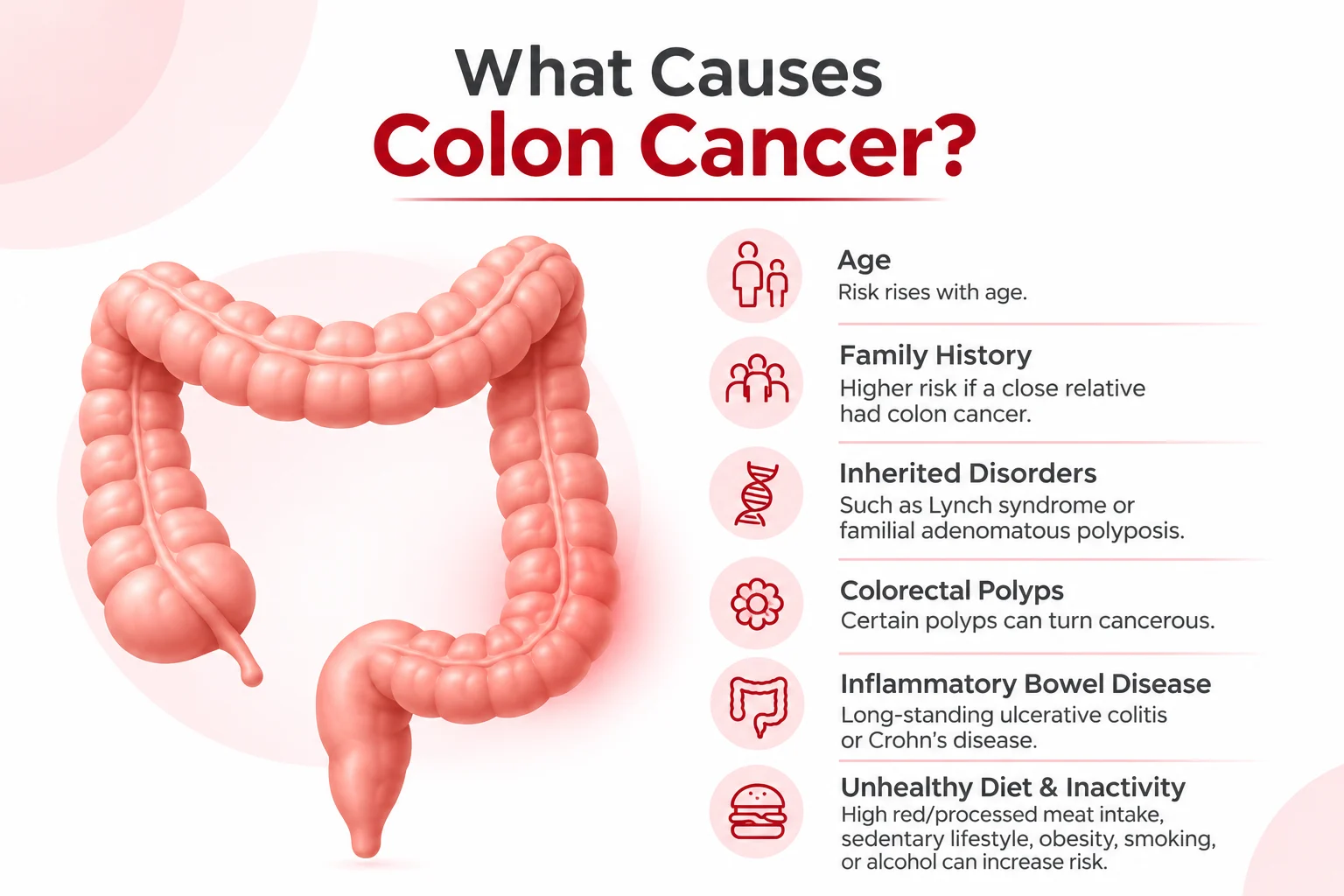
- Age: The risk of colon cancer rises with age; however, it may also affect younger individuals.
- Family history: The risk increases if you have a parent, brother, sister, or child diagnosed with colon cancer.
- Inherited disorders: The presence of inherited disorders such as Lynch syndrome and familial adenomatous polyposis increases the risk of getting colon cancer.
- Colorectal polyps: The development of certain kinds of polyps leads to cancer if not diagnosed and removed.
- Inflammatory bowel disease: Long-standing ulcerative colitis and Crohn’s disease affecting the colon can increase cancer risk.
- Unhealthy diet and lack of physical activity: A high intake of red or processed meat and a sedentary way of life increase the risk of colon cancer, along with obesity, smoking, and drinking.
However, having one or several risk factors does not guarantee that a person will suffer from cancer in the future. It may only help to determine those who need to be examined more carefully.
When Surgery May Be Needed for Colon Cancer Treatment in Gurgaon
A surgical oncologist evaluates the cancer stage, tumour location, lymph node involvement, and the patient’s overall health before recommending surgery. Colon cancer surgery may be needed in the following conditions:
Early-Stage Colon Cancer
Small, superficial colon cancers may sometimes be removed during a colonoscopy. If cancer has grown deeper into the colon wall, a colectomy may be recommended to remove the affected section and nearby lymph nodes.
Localised Colon Cancer
For cancer confined to the colon or involving nearby lymph nodes, colectomy is commonly recommended. The affected portion of the colon and surrounding lymph nodes are removed, followed by reconnection of the healthy bowel ends where possible.
Cancer Causing a Blockage or Perforation
A colon tumour can block the intestine or cause a perforation (a hole in the colon wall). These complications may require urgent colon cancer surgery to remove the affected section, relieve the blockage or create a temporary stoma.
Cancer That Has Spread
For stage IV colon cancer that has spread to the liver or lungs, surgery may be considered if the affected areas can be safely removed. Chemotherapy, targeted therapy, or other treatments may also be needed as part of an individualised treatment plan.
Does Colon Cancer Stage Determine the Need for Surgery?
Yes, the stage of colon cancer plays an important role in deciding whether surgery is needed. However, the stage alone does not determine the entire treatment plan. The tumour’s location, depth of growth, lymph node involvement, spread to other organs, and the patient’s general health also matter.
Colon cancer is generally divided into five stages:
| Cancer stage | What it means | Role of surgery |
| Stage 0 | Abnormal cells are limited to the innermost lining of the colon. | Polypectomy or local removal may be sufficient. |
| Stage I | Cancer has grown into deeper layers of the colon wall but has not spread to lymph nodes. | Surgery to remove the affected section is commonly recommended. |
| Stage II | Cancer has grown through the colon wall or into nearby tissues but has not reached lymph nodes. | Colectomy is usually the main treatment. Chemotherapy may be considered in higher-risk cases. |
| Stage III | Cancer has spread to nearby lymph nodes but not to distant organs. | Surgery followed by chemotherapy is commonly recommended. |
| Stage IV | Cancer has spread to distant organs, such as the liver or lungs. | Treatment may include systemic therapy and, in selected cases, aoupuxp. |
Symptoms of Colon Cancer That Require Surgery
Colon cancer can sometimes grow without causing noticeable symptoms, especially during its early stages. Certain symptoms may indicate that the tumour needs medical attention and, in some cases, surgical treatment. Main symptoms of colon cancer include:
- Persistent abdominal pain: Ongoing pain or cramping may occur when a tumour grows or narrows the colon.
- Changes in bowel habits: Persistent constipation, diarrhoea or a change in stool consistency may indicate changes in the colon.
- Blood in the stool: A tumour may cause bleeding, which can appear as visible blood or be detected through testing.
- Unexplained weight loss: Losing weight without changing your diet or activity levels can be a warning sign.
- Bowel obstruction: Severe abdominal swelling, pain, vomiting, and difficulty passing stool or gas may indicate a blockage caused by the tumour.
- Perforation of the colon: A hole in the colon wall can cause severe abdominal pain, fever, and infection, requiring emergency treatment.
What Types of Surgery Treat Colon Cancer?
Colon cancer surgery aims to remove the tumour while preserving as much healthy bowel function as possible. Depending on the cancer stage, tumour location, and extent of spread, the surgeon may recommend one of the following procedures:
- Polypectomy: Small, superficial cancers confined to a polyp may be removed during a colonoscopy using specialised instruments. The removed tissue is examined to determine whether further surgery is required.
- Partial Colectomy: Also called colon resection, this procedure removes the affected section of the colon along with surrounding healthy tissue and nearby lymph nodes. Surgeons usually join the remaining healthy ends through a procedure called anastomosis.
- Laparoscopic Colon Cancer Surgery: This minimally invasive procedure uses small abdominal incisions, a camera, and specialised instruments to remove the affected portion of the colon. It may offer less postoperative pain and faster recovery in suitable patients.
- Robotic Colon Cancer Surgery: The surgeon controls specialised robotic instruments from a console to perform precise movements using a magnified view of the surgical area. It may be suitable for selected patients depending on tumour location and complexity.
- Open Colon Cancer Surgery: This procedure involves a larger abdominal incision to access and remove the affected portion of the colon. It may be recommended for large or complex tumours or when cancer involves nearby organs.
- Colostomy or Temporary Stoma: When reconnecting the healthy ends of the colon is not safe, the surgeon may create an opening in the abdominal wall called a stoma. Stool passes through this opening into an external collection bag. A stoma may be temporary or permanent.
Find the Right Approach to Colon Cancer Treatment in Delhi
The need for colon cancer surgery depends on the tumour’s stage, location, and extent of spread. Early diagnosis and timely treatment can help improve outcomes and preserve normal bowel function wherever possible. If you notice persistent digestive changes, blood in your stool, or unexplained abdominal discomfort, seek medical evaluation.
For colon cancer treatment in Delhi, seek guidance from Dr. Archit Pandit to understand your diagnosis and explore suitable surgical treatment options based on your condition.

 WhatsApp