
Video-Assisted Thoracoscopic Surgery (VATS) in Delhi
Advanced minimally invasive thoracic surgery for lung and chest conditions with smaller incisions, reduced pain, and faster recovery. Consult Dr. Archit Pandit for personalised evaluation and evidence-based surgical care.

Book an Appointment
Our team will get back to you within a few hours
Quick Facts About Video-Assisted Thoracoscopic Surgery (VATS)
Everything You Need to Know at a Glance
What is Video-Assisted Thoracoscopic Surgery (VATS)?
A Minimally Invasive Approach to Thoracic Surgery
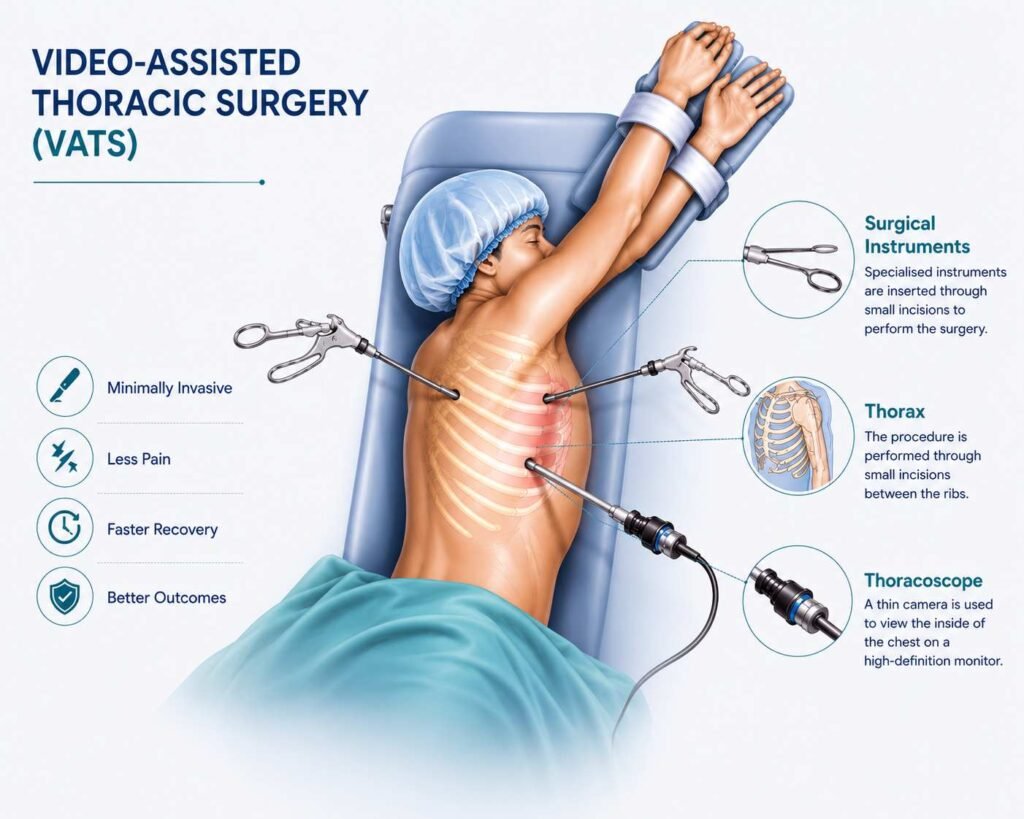
Video-Assisted Thoracoscopic Surgery (VATS) is an advanced minimally invasive thoracic surgery used to diagnose and treat conditions affecting the lungs, pleura, mediastinum, diaphragm, and chest wall. Performed through 2–4 small incisions using a high-definition camera and specialised instruments, VATS offers a precise alternative to traditional open chest surgery, helping reduce pain, minimise scarring, and support faster recovery.
During the procedure, a thoracoscope (a thin camera) is inserted through a small incision between the ribs, providing a magnified view of the chest cavity. This allows the surgeon to operate with exceptional precision while minimising trauma to the surrounding muscles and tissues. Depending on the condition being treated, VATS may be used to perform a lung biopsy, remove lung nodules or tumours, treat pleural diseases, manage pneumothorax, or perform lung cancer surgery.
Today, VATS is widely recognised as the preferred surgical approach for many thoracic conditions because it combines effective treatment with improved patient comfort and quicker recovery.
Why is Video-Assisted Thoracoscopic Surgery (VATS) Recommended?
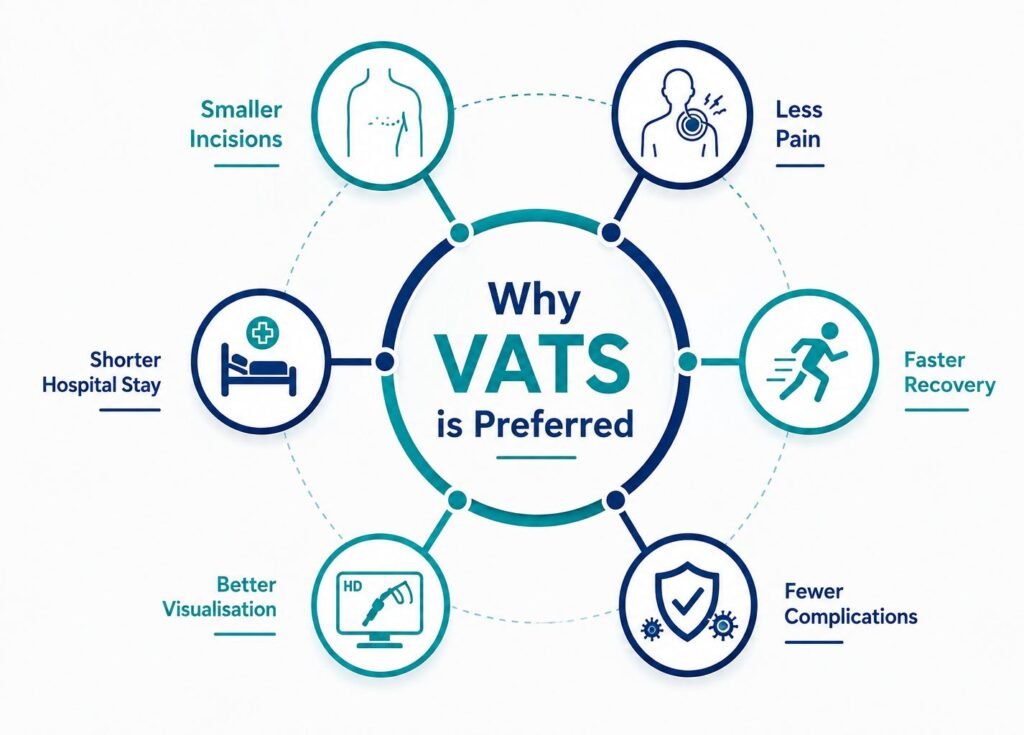
Doctors recommend Video-Assisted Thoracoscopic Surgery (VATS) when a chest condition requires surgical treatment but can be safely managed using a minimally invasive approach. Compared to traditional thoracotomy, VATS reduces surgical trauma while providing excellent access to the chest cavity for accurate diagnosis and treatment.
VATS may be recommended for patients with early-stage lung cancer, suspicious lung nodules, recurrent pneumothorax, pleural effusion, empyema, mediastinal tumours, or unexplained lung diseases requiring a biopsy. It is also used for selected therapeutic and diagnostic thoracic procedures where minimally invasive surgery offers clear clinical advantages.
Before recommending VATS, Dr. Archit Pandit carefully evaluates the type of condition, disease stage, tumour size and location, imaging findings, lung function, previous treatments, and overall health. This personalised assessment ensures that the chosen surgical approach is safe, effective, and tailored to each patient's needs.
Conditions Treated with Video-Assisted Thoracoscopic Surgery (VATS)
Advanced minimally invasive treatment for lung and chest conditions.
Lung Cancer
Minimally invasive surgery for selected early-stage lung cancers.
Lung Nodules
Biopsy or removal of suspicious lung nodules.
Pleural Effusion
Treatment for recurrent fluid around the lungs.
Pneumothorax
Repair of recurrent collapsed lung.
Empyema
Drainage of infected fluid from the chest cavity.
Mediastinal Tumours
Removal of selected tumours between the lungs.
Pleural Biopsy
Tissue sampling for accurate diagnosis.
Interstitial Lung Disease
Lung biopsy to diagnose selected ILDs.
Skull Base Disorders
Acoustic neuromas, chordomas, craniopharyngiomas, and petroclival tumours.
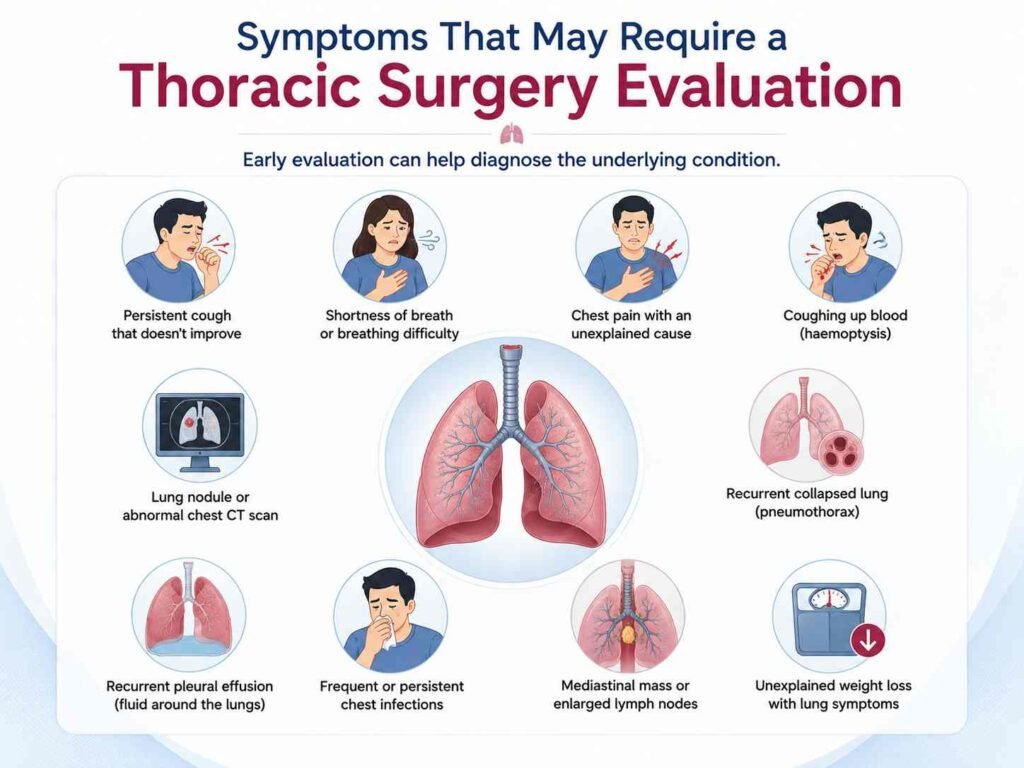
Symptoms That May Require a Thoracic Surgery Evaluation
Early evaluation can help diagnose the underlying condition.
If you experience any of the following symptoms, consult a thoracic surgeon for timely evaluation:
- Persistent cough that doesn't improve
- Shortness of breath or breathing difficulty
- Chest pain with an unexplained cause
- Coughing up blood (haemoptysis)
- Lung nodule or abnormal chest CT scan
- Recurrent collapsed lung (pneumothorax)
- Recurrent pleural effusion (fluid around the lungs)
- Frequent or persistent chest infections
- Mediastinal mass or enlarged lymph nodes
- Unexplained weight loss with lung symptoms
Early evaluation can help diagnose the underlying condition and determine whether Video-Assisted Thoracoscopic Surgery (VATS) is the most appropriate treatment option.
Video-Assisted Thoracoscopic Surgery (VATS) vs Open Chest Surgery
Understanding the Difference Between Minimally Invasive and Traditional Thoracic Surgery
| Feature | Video-Assisted Thoracoscopic Surgery (VATS) | Open Chest Surgery (Thoracotomy) |
|---|---|---|
| Surgical Approach | Performed through 2–4 small incisions | Requires a large chest incision |
| Rib Spreading | Usually not required | Often required |
| Pain After Surgery | Less postoperative pain | More postoperative pain |
| Blood Loss | Generally lower | May be higher |
| Hospital Stay | Usually shorter | Usually longer |
| Recovery Time | Faster recovery | Longer recovery period |
| Scarring | Smaller, less visible scars | Larger surgical scar |
| Return to Daily Activities | Earlier return to normal activities | Longer recovery before resuming routine |
| Best Suited For | Selected lung and thoracic conditions | Complex cases where minimally invasive surgery is not suitable |
While Video-Assisted Thoracoscopic Surgery (VATS) offers several advantages, it may not be suitable for every patient. Dr. Archit Pandit carefully evaluates the type of disease, tumour location, lung function, previous treatments, and overall health before recommending the most appropriate surgical approach.
A Step-by-Step Approach to Minimally Invasive Thoracic Surgery
Our streamlined 5-step process ensures you always know what comes next
Consultation & Diagnosis
Meet Dr. Archit Pandit for a detailed evaluation of your symptoms, medical history, and diagnostic reports to determine the cause of your condition.
Comprehensive Pre-Surgical Assessment
CT scan, PET-CT, pulmonary function tests, blood investigations, and anaesthesia evaluation are performed to assess your fitness for surgery.
Personalised Treatment Planning
Based on your diagnosis, lung function, and overall health, a customised treatment plan is developed to determine whether VATS is the most suitable approach.
Video-Assisted Thoracoscopic Surgery (VATS)
The procedure is performed through small incisions using a high-definition camera and specialised instruments for precise, minimally invasive treatment.
Recovery & Follow-Up Care
After surgery, you'll receive personalised pain management, breathing exercises, recovery guidance, and regular follow-up visits to monitor healing and support long-term outcomes.
Book a consultation for personalised evaluation.
Risks & Safety of Video-Assisted Thoracoscopic Surgery (VATS)
Understanding the Potential Risks
Like all surgical procedures, VATS carries some risks. Dr. Archit Pandit carefully evaluates every patient to minimise complications and ensure the safest possible treatment.
- Bleeding – Usually minimal but may occasionally require additional treatment.
- Infection – Reduced risk due to smaller incisions, but still possible.
- Air Leak – Temporary air leakage from the lung may require a chest drain for a longer duration.
- Conversion to Open Surgery – In complex cases, conversion to thoracotomy may be necessary for patient safety.
- Anaesthesia Risks – Rare complications related to general anaesthesia are carefully monitored by the anaesthesia team.
Every treatment plan is personalised, and the benefits and risks of VATS are thoroughly discussed before surgery to help patients make informed decisions.
Why Choose Dr. Archit Pandit for Video-Assisted Thoracoscopic Surgery (VATS) in Delhi?
Expert Thoracic Cancer Care with a Patient-First Approach
AIIMS-Trained Surgical Oncologist
Expertise in GI & Thoracic Surgery
Comprehensive surgical care for lung, oesophageal, mediastinal, gastrointestinal, and other complex cancer conditions.
Advanced Laparoscopic & Robotic Techniques
Experienced in minimally invasive and robotic-assisted surgery for improved precision, smaller incisions, and faster recovery.
Personalised Cancer Care
Every treatment plan is tailored to the patient's diagnosis, cancer stage, overall health, and individual treatment goals.
Multidisciplinary Team Approach
Collaborative treatment planning with medical oncologists, radiologists, pathologists, pulmonologists, and anaesthesiologists for comprehensive cancer care.
Evidence-Based Treatment Planning
Treatment decisions are guided by the latest clinical guidelines, advanced diagnostics, and international best practices to achieve the best possible outcomes.
Latest Insights from Dr. Archit Pandit
Expert articles on cancer care and awareness.

MYTHS ABOUT CANCER : ALKALINE DIET, IS IT GOOD?
Date 4th January 2019 , a patient walks up into my O.P.D with Gastric cancer . This relatively young gentleman in his late 40’s , well dressed up and educated as per the conversation and the level of conversation we...
Read More arrow_forward
Cancer Prevention : 6 Tips to Reduce your Risk
Know someone recently diagnosed with cancer? Is it very common to hear about it these days? How can you prevent it? Do you know, the WHO (World Health Organisation) stated that 30– 50% of cancers could actually be prevented, just...
Read More arrow_forward
Top 4 Diet Tips for Heart Burn
Top 4 Diet Tips for Heartburn, Acid Reflux & Esophageal Cancer Patients If you have heartburn, acid reflux, GERD (Gastroesophageal Reflux Disease), or Barrett’s Esophagus, following a healthy diet can help reduce symptoms and protect your esophagus. Since GERD and...
Read More arrow_forwardFrequently Asked Questions
Everything you need to know before your consultation
Is Video-Assisted Thoracoscopic Surgery (VATS) considered major surgery? expand_more
Yes. VATS is a major surgical procedure performed under general anaesthesia. However, because it is minimally invasive, it generally involves less pain, smaller incisions, and a faster recovery than traditional open chest surgery.
How painful is VATS surgery? expand_more
Most patients experience significantly less pain after VATS compared to thoracotomy. Pain is usually managed with medications and gradually improves during recovery.
What is the recovery time after VATS surgery? expand_more
Recovery varies depending on the procedure performed and your overall health. Most patients resume routine daily activities within 2–6 weeks.
How many incisions are made during VATS? expand_more
Most VATS procedures are performed through 2–4 small incisions, allowing access to the chest without a large surgical opening.
Will I need a chest tube after VATS surgery? expand_more
Yes. Most patients have a temporary chest drain placed after surgery to remove air or fluid. It is usually removed once the lung has fully expanded.
How much does Video-Assisted Thoracoscopic Surgery (VATS) cost in Delhi? expand_more
The cost varies depending on the condition being treated, the complexity of the procedure, hospital stay, and individual treatment requirements. A consultation with Dr. Archit Pandit will help you understand the expected treatment plan and associated costs.