
Colon Cancer Symptoms Under 45: Signs You Shouldn’t Ignore
You may notice blood in your stool, a change in your bowel habits or persistent abdominal discomfort and assume it is due to piles, constipation, stress, diet or another digestive problem.
Often, such symptoms do have non-cancerous causes. However, being younger than 45 should not be the only reason to dismiss persistent, recurrent or unexplained bowel symptoms.
Colon cancer can occur in younger adults, although it remains more common with increasing age. The important message is not to panic or self-diagnose, but to recognise when a change in your bowel health deserves medical evaluation.
If you have persistent digestive symptoms, a consultation with an appropriate healthcare professional can help identify the underlying cause. For people with symptoms that may require specialist assessment, Dr. Archit Pandit, Surgical Oncologist in Delhi, evaluates gastrointestinal cancers, including colon and rectal cancers, as part of his surgical oncology practice.
What Is Colon Cancer?
Colon cancer develops when abnormal cells in the lining of the colon, or large intestine, grow uncontrollably. It is part of colorectal cancer, which includes cancers arising in the colon and rectum.
Some colorectal cancers may cause few or no symptoms initially. When symptoms do occur, they can overlap with common gastrointestinal conditions such as haemorrhoids, anal fissures, infections, irritable bowel syndrome (IBS) and inflammatory bowel disease.
Therefore, a symptom alone cannot diagnose colon cancer. The duration and pattern of symptoms, medical history, family history and appropriate investigations all contribute to determining the cause.
Colon Cancer Symptoms You Shouldn’t Ignore
The following symptoms do not automatically mean cancer. However, persistent, recurrent or unexplained symptoms should be discussed with a healthcare professional.
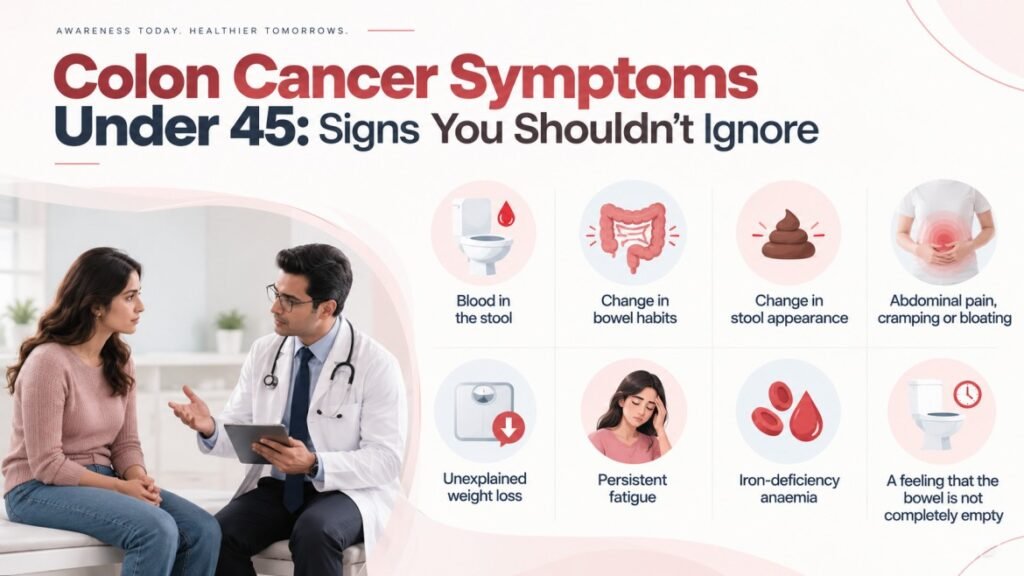
1. Blood in the Stool or Rectal Bleeding
Rectal bleeding can have several causes. Bright-red blood may occur with haemorrhoids or anal fissures, while blood mixed with stool or darker bleeding can have other causes.
Because haemorrhoids are common, it can be tempting to assume that all rectal bleeding is due to piles. However, persistent or unexplained bleeding should not automatically be attributed to haemorrhoids.
This is particularly important if bleeding occurs alongside a change in bowel habits, abdominal symptoms, unexplained weight loss or fatigue.
Rectal bleeding does not confirm colon cancer, but unexplained bleeding warrants appropriate medical assessment.
2. Persistent Change in Bowel Habits
Everyone experiences occasional changes in bowel movements. What deserves attention is a persistent change from your usual bowel pattern.
This may include:
- Persistent constipation
- Persistent diarrhoea
- Alternating constipation and diarrhoea
- A noticeable change in bowel frequency
- A continuing sensation that the bowel has not completely emptied
These symptoms can occur with IBS, infections, dietary changes and other gastrointestinal conditions. However, if they continue, repeatedly return or occur without an obvious explanation, medical evaluation may be appropriate.
3. Persistent Change in Stool Appearance
Stool appearance can naturally vary according to diet, hydration and bowel function.
Some people with bowel conditions may notice a persistent change in stool shape or appearance. However, stool shape on its own is not a reliable indicator of colon cancer.
Rather than trying to diagnose yourself by looking at stool shape, pay attention to persistent changes occurring alongside other symptoms such as bleeding or altered bowel habits.
4. Persistent Abdominal Pain, Cramping or Bloating
Abdominal pain and bloating are common and can occur because of constipation, indigestion, IBS, food intolerance and several other conditions.
However, persistent, unexplained or worsening abdominal pain or cramping deserves medical attention, particularly when it occurs with rectal bleeding, bowel changes, weight loss or anaemia.
5. Unexplained Weight Loss
Unintentional weight loss can have many causes, including nutritional problems, metabolic conditions, chronic illness and gastrointestinal disorders.
It does not automatically indicate cancer. However, weight loss that occurs without a deliberate change in diet or physical activity and continues over time should be evaluated, particularly if accompanied by other digestive symptoms.
6. Persistent or Unusual Fatigue
Fatigue is common and can be caused by inadequate sleep, stress, nutritional deficiencies, infections, anaemia and many other conditions.
In some people with colorectal cancer, ongoing blood loss can contribute to iron-deficiency anaemia, which may result in tiredness or weakness.
However, fatigue alone is not specific to colon cancer. Its significance depends on the overall clinical picture.
7. Iron-Deficiency Anaemia
Not all gastrointestinal bleeding is visible. Chronic blood loss from the digestive tract can sometimes contribute to iron-deficiency anaemia.
Anaemia has many possible causes, so having anaemia does not mean that a person has colon cancer. However, unexplained or persistent iron-deficiency anaemia may require investigation to determine its source.
Colon Cancer Symptoms Under 45: Why Age Shouldn’t Be the Only Consideration
If you are under 45, persistent bowel symptoms should not simply be dismissed because of your age.
Colorectal cancer is less common in younger adults than in older adults. However, research has identified several symptoms associated with early-onset colorectal cancer.
An analysis discussed by the US National Cancer Institute identified abdominal pain, rectal bleeding, diarrhoea and iron-deficiency anaemia as warning signs that were more commonly reported before a diagnosis of colorectal cancer in younger adults.
This finding does not mean that having one of these symptoms means you have cancer. These symptoms are common and may result from many non-cancerous conditions.
The important consideration is the overall pattern:
Is the symptom persistent? Is it unexplained? Does it keep returning? Are several symptoms occurring together? Has there been a noticeable change from your normal bowel health?
For someone under 45, these questions can be more useful than age alone when deciding whether medical advice is appropriate.
The right response is awareness, not alarm. Persistent or concerning symptoms should be assessed rather than self-diagnosed.
When Should You See a Doctor?
Consider speaking with a qualified healthcare professional if you experience:
- Persistent or recurrent rectal bleeding
- Blood mixed with stool or unusually dark stool
- A persistent unexplained change in bowel habits
- Ongoing abdominal pain or cramping
- Persistent unexplained bloating
- Unintentional weight loss
- Unexplained iron-deficiency anaemia
- Symptoms that are worsening or repeatedly returning
- Several concerning symptoms occurring together
These symptoms do not mean that you have colon cancer. They indicate that the underlying cause may need to be investigated.
Significant or heavy bleeding, severe abdominal pain, fainting, marked weakness or other acute concerning symptoms require prompt medical attention.
Depending on the clinical situation, a doctor may assess your symptoms and medical history and recommend appropriate investigations. These can include blood tests, stool-based tests, imaging or colonoscopy.

Colon Cancer Risk Factors
Symptoms and risk factors are different.
Factors associated with colorectal cancer risk include:
- Increasing age
- A family history of colorectal cancer or certain colorectal polyps
- Previous colorectal polyps or colorectal cancer
- Certain inherited genetic conditions
- Inflammatory bowel disease, including Crohn’s disease and ulcerative colitis
People with significant family history, inherited conditions or other risk factors may require an individualised screening approach.
Having a risk factor does not mean you have cancer, and having no known risk factor does not eliminate the possibility.
The Takeaway: Don’t Dismiss Persistent Symptoms Because You’re Young
Colon cancer symptoms under 45 deserve attention when they are persistent, recurrent, unexplained or occur in combination.
Blood in the stool, bowel changes, abdominal pain, unexplained weight loss, fatigue and iron-deficiency anaemia can all have causes other than cancer. At the same time, persistent symptoms should not automatically be dismissed as piles, stress, diet or a routine digestive problem simply because someone is young.
The goal is awareness without unnecessary fear.
If you notice a persistent or unexplained change in your bowel health, consult a qualified healthcare professional rather than trying to determine the cause from symptoms alone.
For patients requiring specialist evaluation of gastrointestinal or colorectal cancers, Dr. Archit Pandit is a Surgical Oncologist in Delhi specialising in advanced cancer surgery, including treatment of colon and rectal cancers.
This article is intended for general educational purposes and does not replace personalised medical advice, diagnosis or treatment. Screening and diagnostic decisions should be based on an individual’s symptoms, medical history, family history and assessment by a qualified healthcare professional.
References
- National Cancer Institute (NCI). Study Identifies Potential Warning Signs of Colorectal Cancer in Younger Adults. 2023.
- National Cancer Institute (NCI). Colorectal Cancer Research and Screening Resources. Information on colorectal cancer detection and screening approaches.
- National Medical Commission (NMC). National Medical Commission Registered Medical Practitioner (Professional Conduct) Regulations, 2023. The article has been prepared with attention to responsible, patient-focused and evidence-informed healthcare communication.

 WhatsApp