
How Long Does Recovery Take After Cancer Surgery?
Wondering when you will feel like yourself again after cancer surgery? Recovery can take a few days to a few months, depending on your age, the type of surgery, and your overall health. Minor operations may need about a week, while major ones can take months (Cancer Council Australia). Most wounds heal in 2 to 4 weeks, but full strength may take 3 to 6 months. Dr. Archit Pandit explains what to expect, step by step.
Why Recovery Time Is Different for Every Patient
Recovery time differs because every patient has a different type of surgery, age, health, cancer stage and follow-up treatment. A person with good fitness and a smaller operation usually heals faster than someone with other health problems or a major surgery. Comparing your recovery with others can be misleading. These are the main reasons two patients can heal at different speeds:
- Type of surgery: internal organ surgery needs more time than skin-level surgery
- Age: older patients may need longer to rebuild strength
- Health conditions: diabetes, heart disease, obesity or weak lungs can slow healing
- Cancer stage: larger or advanced cancers may need bigger operations
- Extra treatment: chemotherapy or radiation adds to total recovery time
- Different healing speeds: your wound, inner healing, energy and emotions each recover at their own pace
Cancer Surgery Recovery Timeline: Week by Week
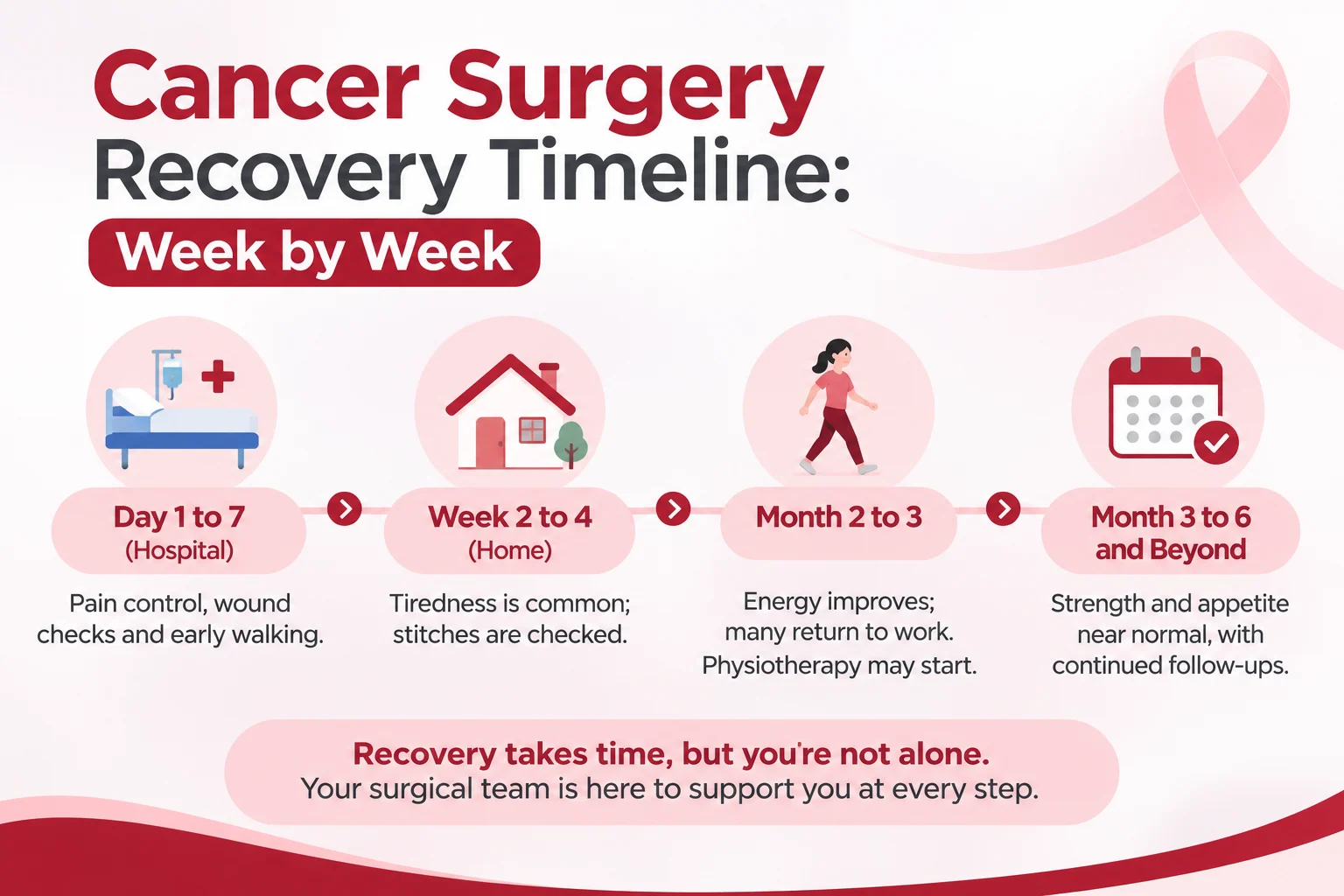
A typical cancer surgery recovery has four stages: hospital stay in the first week, rest and wound healing at home in weeks 2 to 4, slowly returning energy in months 2 to 3, and near-normal strength by months 3 to 6. Follow-up visits continue after that. Here is what usually happens at each stage:
- Day 1 to 7 (hospital): pain control, wound and drain checks, and early walking to prevent clots and chest infection
- Week 2 to 4 (home): tiredness and mild soreness are common, stitches are checked, and the biopsy report is discussed
- Month 2 to 3: energy improves, many return to desk work, and physiotherapy may start if needed
- Month 3 to 6 and beyond: strength and appetite near normal, scars keep softening, and scans and check-ups continue
Recovery Time by Type of Cancer Surgery
Skin cancer removal takes about 2 to 3 weeks, lumpectomy and thyroid surgery 3 to 4 weeks, prostate and uterine surgery 6 to 8 weeks, colon surgery 6 to 12 weeks, and lung, stomach, pancreas or head and neck surgery 2 to 6 months. These are general ranges and vary by patient. Use this table to find the range for your own surgery:
| Type of cancer surgery | Hospital stay | Light activity | Full recovery |
| Skin cancer removal | Same day | 3 to 7 days | 2 to 3 weeks |
| Breast lumpectomy | Same day to 1 day | 1 to 2 weeks | 3 to 4 weeks |
| Mastectomy | 1 to 3 days | 3 to 4 weeks | 6 to 8 weeks or more |
| Thyroid cancer surgery | 1 to 2 days | 1 to 2 weeks | 3 to 4 weeks |
| Colon and rectal cancer surgery | 3 to 8 days | 2 to 6 weeks | 6 to 12 weeks |
| Lung cancer surgery | 4 to 7 days | 4 to 6 weeks | 2 to 3 months |
| Prostate cancer surgery | 1 to 3 days | 3 to 4 weeks | 6 to 8 weeks |
| Uterine or ovarian cancer surgery | 2 to 5 days | 3 to 4 weeks | 6 to 8 weeks |
| Stomach or pancreas cancer surgery | 7 to 14 days | 6 to 8 weeks | 3 to 6 months |
| Head and neck cancer surgery | 3 to 10 days | 4 to 6 weeks | 2 to 4 months |
Note: These are general recovery estimates and may vary from patient to patient. Please consult your surgeon for guidance based on your own condition and type of surgery.
Laparoscopic and Robotic vs Open Cancer Surgery: Which Heals Faster?
Laparoscopic and robotic surgery usually heal faster than open surgery because they use small cuts, causing less pain, less blood loss and a shorter hospital stay. Open surgery is still the safest choice for some large or complex cancers. Your surgeon will choose the best method for your case. Here is how the two approaches compare:
- Laparoscopic (keyhole) and robotic: small cuts, less pain, smaller scars, shorter stay, quicker return to daily life
- Open surgery: one larger cut, longer hospital stay, longer recovery, but needed for some complex cases
- Choosing the method: depends on cancer type, size, location and your health, not only on healing speed
What Affects Healing and How to Recover Faster at Home?
You can recover faster at home by caring for your wound, eating protein-rich food, walking gently every day, controlling pain, resting well, avoiding smoking and alcohol, and attending every follow-up visit. Age, health, cancer stage and extra treatment also affect healing speed. Small daily habits make a real difference.
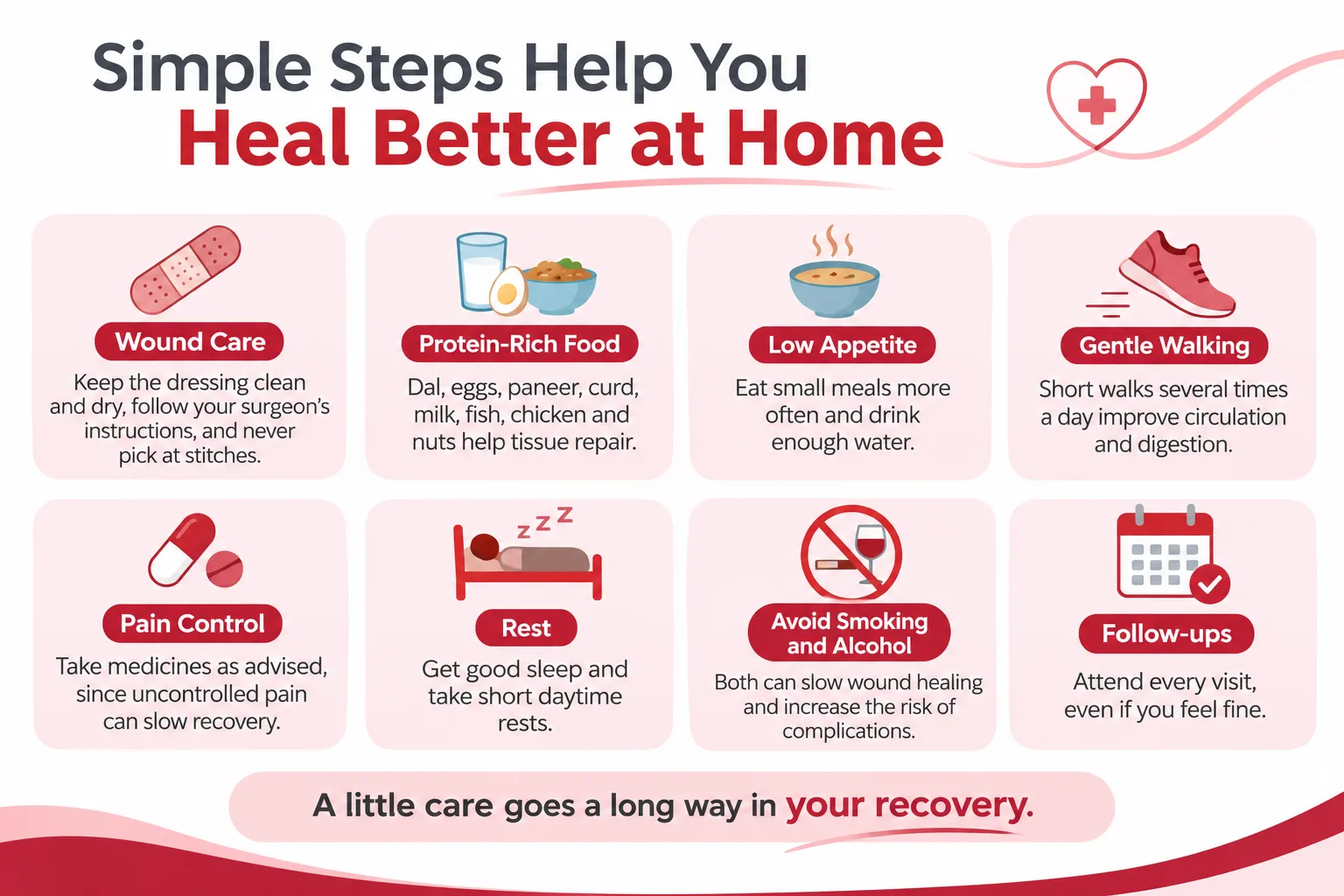
These simple steps help you heal better at home:
- Wound care: keep the dressing clean and dry, follow your surgeon’s change schedule, and never pick at stitches
- Protein-rich food: dal, eggs, paneer, curd, milk, fish, chicken, and nuts help tissue repair
- Low appetite: eat small meals more often and drink enough water
- Gentle walking: short walks several times a day improve circulation and digestion
- Pain control: take medicines as advised, since uncontrolled pain slows movement and deep breathing
- Rest: sleep and short daytime rests are part of healing
- Avoid smoking and alcohol: both slow wound healing and raise the risk of problems
- Follow-ups: attend every visit, even if you feel fine
What Is Normal and When to Call Your Doctor
Tiredness, mild pain, low appetite, mild swelling and mood changes are normal after cancer surgery. Call your doctor right away if you have fever, wound redness or pus, heavy bleeding, worsening pain, leg swelling, chest pain or breathing trouble, or constant vomiting. Use these two lists to tell normal healing from a warning sign.
Normal after surgery:
- Tiredness that lasts for weeks
- Mild soreness near the cut
- Low appetite or taste changes
- Itching or numbness around the scar
- Poor sleep, worry or feeling low
Call your doctor or go to the hospital for:
- Fever or shaking chills
- Redness, warmth, pus or a bad smell from the wound
- Bleeding or a wound that opens
- Pain that keeps getting worse despite medicine
- Swelling, pain or redness in one leg
- Chest pain or trouble breathing
- Vomiting that does not stop
If low mood or anxiety does not ease, speak to your doctor. Counselling and support groups can help.
Questions About Your Recovery? Talk to Your Surgeon
Recovery after cancer surgery can look different for everyone. You may have questions about wound care, diet, daily activities or what to expect in the weeks ahead. Your surgeon can guide you based on the type of surgery you have had and your overall health.
Dr. Archit Pandit can help patients understand what to expect during recovery and address their concerns along the way.
Here are a few things worth discussing with your doctor:
- How long recovery may take
- How to care for your wound and when you can return to normal activities
- What foods to eat and which activities to avoid
- Which symptoms should not be ignored
- When to come for follow-up visits and whether further treatment is needed
If you have any concerns during recovery, don’t hesitate to reach out to your surgeon. The right guidance can help you feel more confident and prepared at every stage of healing.
- Phone: +91 74689 22222
- Hospital: Fortis Escorts Hospital, Okhla, New Delhi – 110025
- Address: Opposite Sukhdev Vihar Metro Station, New Delhi
- Consultation Hours: Monday–Saturday, 10:00 AM–5:00 PM
- Website: www.drarchitpandit.com

 WhatsApp