
Advanced Oral Cancer Treatment in Delhi
A mouth ulcer that won’t heal needs checking. Found early, oral cancer is often highly treatable. Dr. Archit Pandit, an experienced oral cancer surgeon in Delhi, provides personalised mouth cancer treatment, from surgery to reconstruction.
Book Appointment
Connect with Dr. Archit Pandit for expert rectal cancer treatment in Delhi
What is Oral Cancer?
Understanding Oral Cancer
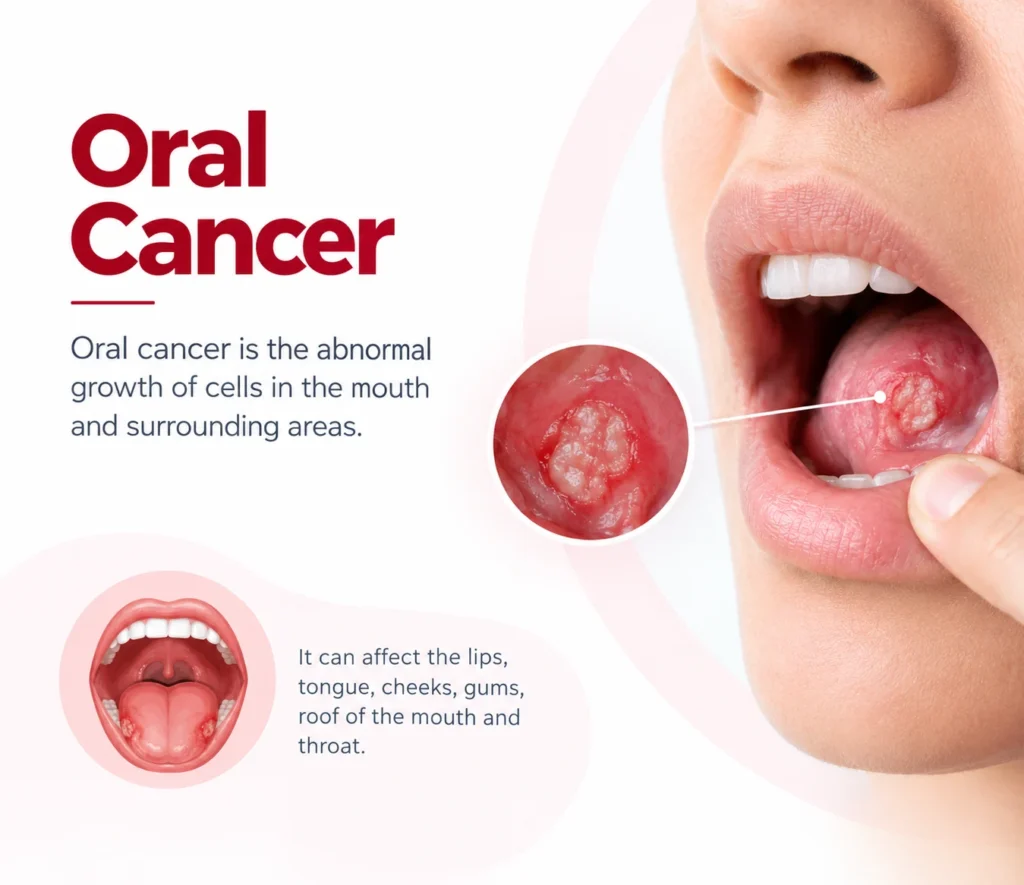
Oral cancer, also called mouth cancer or oral cavity cancer, is a cancer that starts in the tissues of the mouth. It can develop on the tongue, inner cheeks (buccal mucosa), gums, floor of the mouth, roof of the mouth (hard palate), lips, or the area behind the wisdom teeth (retromolar trigone).
It begins when abnormal cells in the lining of the mouth grow in an uncontrolled way and, if untreated, can invade the jawbone and spread to lymph nodes in the neck or to other parts of the body.
Oral cancer is one of the most common cancers in India, largely because of the widespread use of tobacco in chewed and smoked forms. The good news is that the mouth is easy to examine, so changes can often be spotted early by you, your dentist or your doctor.
Not every mouth sore is cancer. Ulcers from cheek biting, sharp teeth, ill-fitting dentures or infections are common. But a sore, patch or lump that does not settle within about two to three weeks should always be checked by a specialist.
Types of Oral Cancer
Oral cancer is described by where it starts and by the type of cell involved. Accurate oral cancer diagnosis in Delhi identifies both, because they guide the treatment plan.
Squamous Cell Carcinoma (SCC)
Squamous cell carcinoma starts in the thin, flat cells lining the mouth. It is by far the most common type, accounting for the vast majority of oral cancers.
Tongue Cancer (Oral Tongue Cancer)
Tongue cancer usually appears on the side of the tongue as a persistent ulcer, hard lump or red-white patch. It can cause pain, difficulty speaking, and trouble swallowing.
Buccal Mucosa (Cheek) Cancer
Cancer of the inner cheek is especially common in people who chew tobacco, gutka, khaini or paan. It may show up as a non-healing ulcer, a thickened area or difficulty opening the mouth.
Gum (Gingivobuccal) Cancer
Gum cancer may look like a swelling or ulcer on the gums. It can cause loose teeth, denture problems or pain, and may involve the jawbone.
Floor of Mouth and Palate Cancer
Cancers under the tongue or on the roof of the mouth can cause pain, bleeding or difficulty with speech and swallowing.
Lip Cancer
Lip cancer often appears as a crusted sore or ulcer on the lip that does not heal, and is linked with tobacco use and long sun exposure.
Other Rarer Types
Less common types include verrucous carcinoma, minor salivary gland cancers and mucosal melanoma. Each is treated differently, which is why a biopsy and expert pathology review are essential.
What are the Different Oral Cancer Stages?
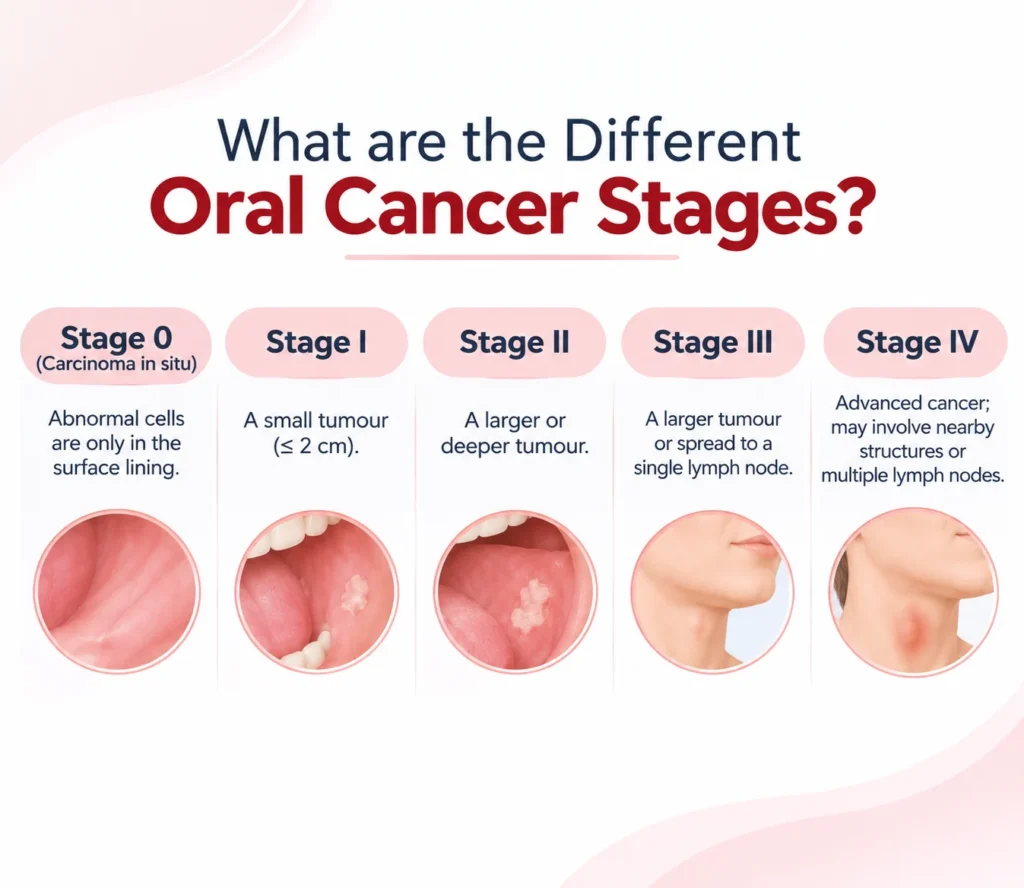
Oral cancer staging tells doctors how big the tumour is, how deeply it has grown and whether it has spread to the lymph nodes or other organs. It is one of the most important factors in planning treatment.
- Stage 0 (carcinoma in situ): Abnormal cells are only in the surface lining of the mouth and have not invaded deeper tissue.
-
Stage I: A small tumour (about 2 cm or less) that is not deeply invasive and has not spread to lymph nodes.
-
Stage II: A larger or deeper tumour, still without lymph node spread.
-
Stage III: A larger or deeper tumour, or a small tumour that has spread to a single lymph node on the same side of the neck.
-
Stage IV: Advanced oral cancer. The tumour may have invaded nearby structures such as the jaw bone, skin or deep tongue muscles, or may involve multiple or larger neck lymph nodes, or may have spread to distant organs such as the lungs.
The exact stage is confirmed after clinical examination, imaging, biopsy and, after surgery, the final pathology report. Your treatment is then planned according to the stage, the tumour's features and your overall health.
How is Oral Cancer Diagnosed?
Minimally invasive, patient-focused surgical care
The diagnostic approach depends on your symptoms and examination findings. An accurate oral cancer diagnosis in Delhi confirms the cancer, identifies its type and determines the stage so that the right treatment can be planned. Diagnostic steps of oral cancer include:
Clinical Examination of the Mouth and Neck
The doctor reviews your symptoms, habits (tobacco, alcohol), medical history and family history, then carefully examines the mouth, tongue, throat and neck lymph nodes.
Biopsy
A small sample of tissue from the suspicious area is examined under a microscope. A biopsy is the only way to confirm oral cancer for certain.
CT Scan, MRI and Ultrasound
Imaging shows how deeply the tumour has grown, whether the jaw bone is involved and whether neck lymph nodes are affected. MRI is especially useful for tongue and soft tissue tumours, while CT helps assess bone.
PET-CT Scan
A PET-CT may be advised in selected patients, especially in advanced cases, to check for spread to other parts of the body.
Fine Needle Aspiration (FNAC) of Neck Nodes
If a neck lump is present, a needle test may be used to check whether it contains cancer cells.
Dental and Fitness Assessment
A dental review and general health tests help prepare for surgery or radiation and support smoother recovery.
Oral Cancer Treatment Options in Delhi
Surgery is the main treatment for most oral cancers. Oral cancer surgery in Delhi is planned around the tumour’s type, stage and location, with two goals: removing the cancer completely and protecting speech, chewing, swallowing and appearance.
Wide Local Excision
The tumour is removed along with a margin of healthy tissue. For tongue cancer, this may be a partial glossectomy. Clear margins are the most important goal and are confirmed in the final pathology report.
Neck Dissection
Oral cancer often spreads first to neck lymph nodes. These nodes are removed to be examined and to lower the risk of recurrence, usually during the same operation. In selected early cases, sentinel lymph node biopsy may be an option.
Jaw Bone Surgery
If the tumour involves the jaw, the affected part of the bone (mandibulectomy or maxillectomy) may be removed. Where possible, only the involved portion is taken to preserve function and appearance.
Reconstructive Surgery
After larger operations, tissue from the forearm, thigh or leg can rebuild the mouth, tongue or jaw. It is planned together with the cancer surgery to help you eat, speak and swallow.
Other Treatments
Based on the pathology report, radiation or chemotherapy may follow surgery to reduce recurrence. Radiation can be the main treatment when surgery isn’t possible. Targeted therapy and immunotherapy may be considered for recurrent or advanced cases.
Recovery After Oral Cancer Surgery
What to Expect After Mouth Cancer Surgery
Recovery depends on the size and location of the tumour, the type of surgery, whether reconstruction was needed and whether further treatment is required. Most patients stay in hospital for several days, and some may need a temporary feeding tube.
Recovery may involve:
- Wound and oral care and pain management
- Gradual return to eating soft foods, then a normal diet where possible
- Speech and swallowing therapy
- Neck and shoulder exercises after neck dissection
- Regular follow-up visits and review of the final pathology report
- Additional treatment when recommended
- Stopping tobacco and alcohol completely to lower the risk of recurrence
Your surgical team will give personalised guidance on diet, wound care, activity and follow-up for the procedure you have.
Why Consult Dr. Archit Pandit for Oral Cancer Treatment in Delhi?
Patient-focused surgical care for mouth and head and neck cancers
Choosing the right oral cancer specialist in Delhi is an important decision. Dr. Archit Pandit combines surgical expertise, advanced training and modern techniques to plan treatment around your diagnosis and your goals:
- 15+ Years of Experience: Extensive experience in surgical oncology and complex cancer surgery.
- 10,000+ Cancer Surgeries: Experience across a wide range of cancer operations.
- Head and Neck Cancer Expertise: Surgical care for oral cavity and other head and neck cancers.
- Advanced Surgical Training: Trained at AIIMS, New Delhi, with fellowships in Japan and South Korea.
- Personalised Treatment Planning: Options chosen according to the stage, location and your needs, with a focus on removing the cancer while protecting function.
- Second Opinion Support: Clear, honest guidance if you have already been diagnosed and want another view.
Take the First Step Towards Expert Oral Cancer Care
If you have a mouth ulcer that will not heal, a white or red patch, a lump in the mouth or neck, or have recently been diagnosed with oral cancer, seek guidance from Dr. Archit Pandit for a complete evaluation and a clear treatment plan. A second opinion for oral cancer in Delhi is welcome at any stage.
Frequently Asked Questions
Everything you need to know before your consultation
1. What are the symptoms of late-stage oral cancer? expand_more
A large non-healing ulcer or growth, constant pain, loose teeth, difficulty opening the mouth, chewing or swallowing, changed speech, a hard neck lump, bleeding, ear pain and unexplained weight loss. Any mouth sore lasting more than three weeks needs checking.
2. How to prevent oral cancer? expand_more
Avoid all tobacco, including gutka, khaini, zarda, areca nut, cigarettes and bidis. Also limit alcohol, eat fruits and vegetables, maintain oral hygiene, consider HPV vaccination and get regular dental check-ups.
3. How does mouth cancer occur? expand_more
It occurs when DNA damage in the cells lining the mouth makes them grow out of control. Common causes are tobacco, areca nut, alcohol, HPV infection and long-term irritation.
4. Does cigarette cause mouth cancer? expand_more
Yes. Smoking is a major cause, and the risk rises with the amount and duration. Smokeless tobacco is equally harmful, and combining tobacco with alcohol increases the risk further. Quitting lowers the risk over time.
5. What is the average cost of oral cancer treatment in Delhi? expand_more
The oral cancer treatment cost in Delhi depends on the stage, type of treatment, hospital stay and room category. It ranges from a few lakh rupees for early-stage surgery to considerably more for advanced treatment. An accurate estimate is possible only after evaluation. Contact our team for guidance on costs and insurance.
6. Can oral cancer be cured if detected early? expand_more
Yes. Early-stage oral cancer is often highly treatable, frequently with surgery alone. A non-healing mouth ulcer or patch should never be ignored.
7. How to book an appointment with Dr. Archit Pandit for oral cancer treatment in Delhi? expand_more
Book an appointment through the form on this page or contact our team directly. Please bring any previous reports, biopsy slides and scans.

Dr. Archit Pandit
Dr. Archit Pandit is a Surgical Oncologist and Director & Head of the Department of Surgical Oncology at Fortis Escorts Hospital, New Delhi. With over 15 years of clinical experience, he specialises in the surgical management of gastrointestinal, thoracic, breast, gynaecological, head and neck, and complex cancers. He is trained at AIIMS, New Delhi, with advanced fellowship training in surgical oncology in Japan and colorectal cancer in South Korea. His expertise includes robotic cancer surgery, laparoscopic surgery, HIPEC, cytoreductive surgery, and minimally invasive cancer surgery.
This content is reviewed by Dr. Archit Pandit
 WhatsApp