
Breast Cancer Warning Signs: When Should You See a Specialist?
Breast cancer does not always cause obvious symptoms in its early stages. Common warning signs include a new breast lump, changes in breast size or shape, nipple changes, unusual discharge, and persistent skin changes. While many breast changes are caused by non-cancerous conditions, new or unusual changes should be evaluated by a healthcare professional.
Understanding Breast Cancer
For example, imagine Neha, 42, who notices a small change in one breast while getting dressed one morning. There is no pain, so she almost ignores it. When the change persists, she decides to consult a breast specialist. An examination and further tests help identify the cause. This highlights why knowing what is normal for you and paying attention to new or unusual breast changes matters.
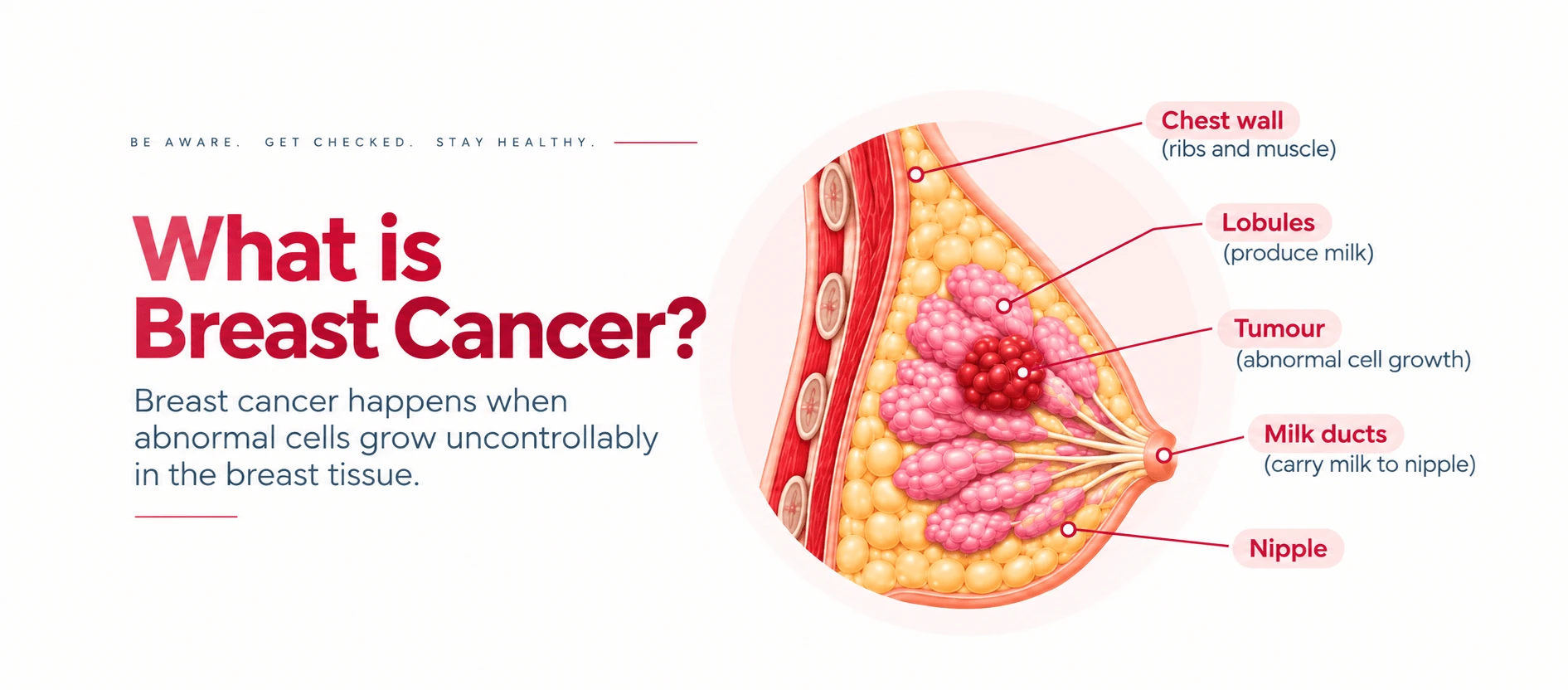
Breast cancer develops when abnormal cells in the breast grow uncontrollably and may form a tumour. It is the most frequently diagnosed cancer among women in India. It represents nearly 27% of all cancers among women, according to GLOBOCAN 2022 estimates cited in a 2025 review published in JCO Global Oncology.
Breast cancer can vary in its type, stage, and response to treatment. Recognising breast cancer warning signs, getting unusual changes evaluated, and receiving timely diagnosis and treatment can help support better care and outcomes.
What Are the Early Symptoms of Breast Cancer?
Knowing the early symptoms of breast cancer can help you recognise changes in your breasts and seek medical advice at the right time. Breast cancer does not always cause noticeable symptoms in the early stages, and some breast cancers may be found during routine breast screening before any symptoms appear.
Common breast cancer symptoms and warning signs may include:
- A new lump or swelling in the breast or underarm
- A thickened or firm area in the breast
- A change in the size or shape of one breast
- Changes in the skin of the breast, such as dimpling or puckering
- Skin that looks like the texture of an orange peel
- A change in the appearance or position of the nipple
- A nipple that turns inward when it was previously normal
- Unusual nipple discharge, especially bloody discharge
- Redness, scaling, peeling, or persistent skin changes around the nipple
- Swelling or a noticeable change in one breast
These breast cancer signs can also occur with conditions that are not cancer. However, if you notice a new or unusual breast change, it is important to get it checked rather than trying to identify the cause yourself.
Which Breast Changes Should You Not Ignore?
Most breast changes are not caused by cancer. Hormonal changes, cysts, fibroadenomas, infections, and other benign breast conditions can also affect the breast. However, any new, unusual, or persistent breast change is worth discussing with a doctor.
Changes that should be checked include:
- A new or unusual change in breast size or shape
- A newly inverted nipple
- Unusual or bloody nipple discharge
- Persistent redness, scaling or other skin changes
- Skin dimpling, puckering or thickening
- A lump or thickened area that feels different from the surrounding tissue
You do not need to wait for a breast change to become painful. Breast cancer does not always cause pain, particularly in its early stages. If something feels different or concerns you, a medical evaluation can help identify the cause.
Does a Breast Lump Always Mean Breast Cancer?
No, a breast lump does not always mean breast cancer. Many breast lumps are benign and may develop because of conditions such as cysts or fibroadenomas.
The feel of a lump alone cannot confirm whether it is cancerous. Some cancerous lumps may feel firm or irregular, while benign lumps can also have different textures.
If you find a new breast lump, avoid self-diagnosis. A doctor or breast specialist can examine the lump and, when required, recommend further tests such as:
- Mammogram
- Breast ultrasound
- Clinical breast examination
- Biopsy, when needed
These tests help determine whether the lump is benign or requires further evaluation.
When Should You See a Breast Cancer Specialist?
You should consider seeing a breast cancer specialist if you notice a new breast lump, persistent breast change, or any symptom that is unusual for you. Early medical evaluation can help identify the cause and determine whether further testing is needed.
Dr. Archit Pandit can review your symptoms, medical history and family history before recommending appropriate breast cancer screening or diagnostic tests, such as a mammogram, ultrasound or biopsy.
Seeing a specialist does not mean that you have breast cancer. Many breast changes are harmless, but getting them evaluated can provide clarity and, when necessary, support early breast cancer diagnosis and treatment.
How Is Breast Cancer Diagnosed?
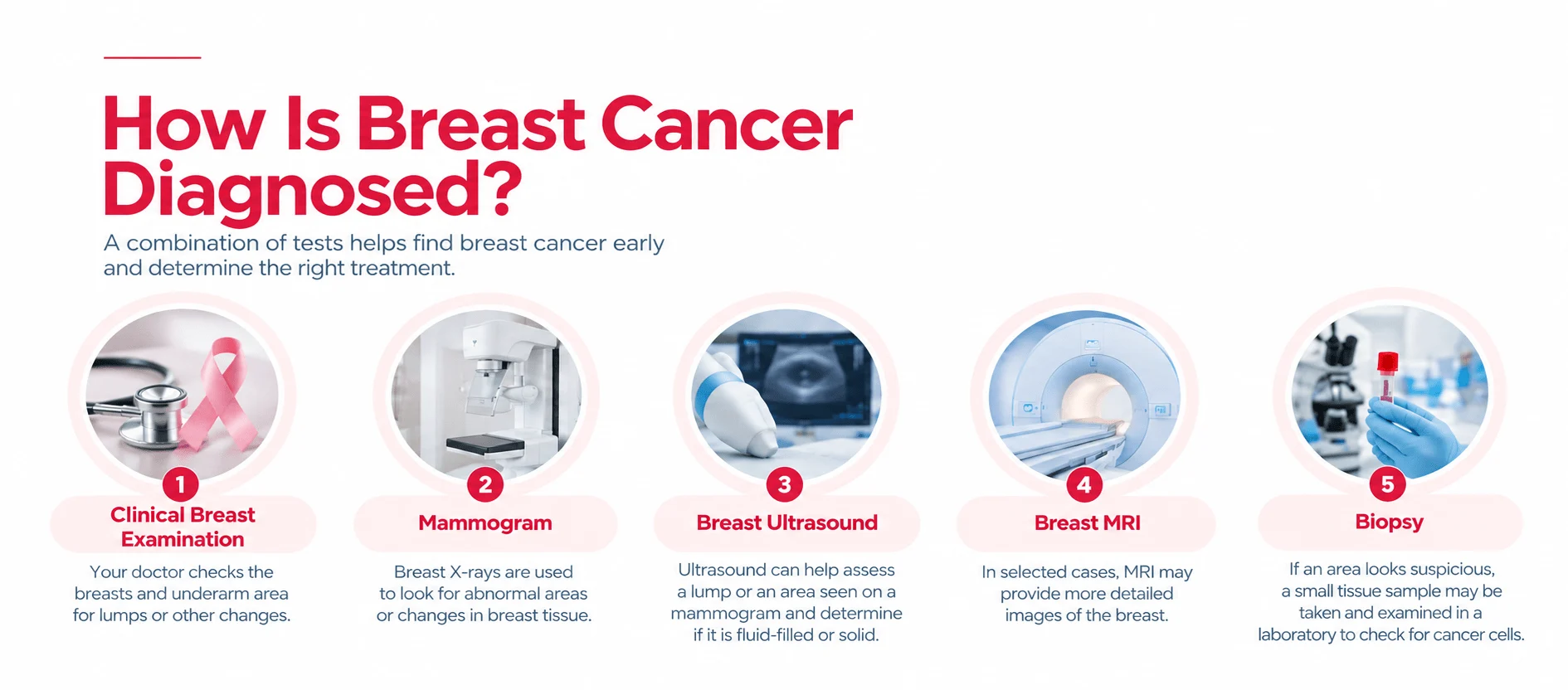
If you notice a breast lump or another unusual breast change, your doctor may recommend further evaluation to understand what is causing it. Breast cancer diagnosis usually involves a combination of a clinical examination, imaging, and, when needed, a biopsy.
Depending on your symptoms, age, and medical history, the evaluation may include:
- Clinical breast examination: Your doctor checks the breasts and underarm area for lumps or other changes.
- Mammogram: Breast X-rays are used to look for abnormal areas or changes in breast tissue.
- Breast ultrasound: Ultrasound can help assess a lump or an area seen on a mammogram and determine whether it is fluid-filled or solid.
- Breast MRI: In selected cases, MRI may provide more detailed images of the breast.
- Biopsy: If an area looks suspicious, a small tissue sample may be taken and examined in a laboratory to check for cancer cells.
Not every breast lump or abnormal finding is cancer. These tests help your doctor determine the cause and decide whether further breast cancer treatment or monitoring is needed.
Why Is Early Detection of Breast Cancer Important?
Early detection of breast cancer can make a significant difference in treatment planning and outcomes. When breast cancer is found before it has spread to other parts of the body, there may be more treatment options available.
Being aware of breast cancer warning signs, following recommended screening, and getting unusual breast changes checked can help with earlier diagnosis.
Early detection does not mean every breast change is cancer. It simply means that a concerning change is evaluated promptly rather than being ignored. If you notice a new lump, nipple change, unusual discharge, or persistent skin change, speak to a doctor or breast specialist.
What Should You Expect During a Breast Cancer Consultation?
A breast cancer consultation is an opportunity to discuss any breast changes or concerns and understand whether further evaluation is needed. You may be asked about your symptoms, how long you have noticed them, your medical history, and any family history of breast cancer.
Your doctor may then perform a clinical breast examination and recommend appropriate tests based on your individual situation.
During a consultation with Dr. Archit Pandit, you may be asked about:
- Your current breast symptoms or concerns
- Personal and family medical history
- Previous breast screening or test results
- Whether a mammogram, ultrasound, or other investigation is needed
- What the test results may mean and what happens next
- Possible breast cancer treatment options if a diagnosis is confirmed
You can also ask questions about your diagnosis, recommended tests, treatment choices, and next steps. A consultation is not only about finding a diagnosis; it is also about helping you understand your options and make informed decisions about your care.
Take the Next Step for Your Breast Health
Being aware of breast cancer warning signs can help you recognise changes early and seek medical advice without unnecessary delay. A breast lump, nipple change, unusual discharge, or persistent skin change does not always mean cancer, but it should not be ignored.
If you have noticed a new or unusual breast change, consult Dr. Archit Pandit for expert breast cancer evaluation and personalised guidance. Early assessment can help identify the cause and, when needed, support timely breast cancer diagnosis and treatment.
Book an appointment with Dr. Archit Pandit today to discuss your breast health concerns.
Medical Disclaimer
This article is intended for general educational purposes and does not replace personalised medical advice, diagnosis, or treatment. If you notice a new or persistent breast change, consult a qualified healthcare professional.
References
- National Cancer Institute (NCI). Breast Cancer Signs and Symptoms
- National Cancer Institute (NCI). How Is Breast Cancer Diagnosed?
- American Cancer Society (ACS). Signs and Symptoms of Breast Cancer

 WhatsApp